


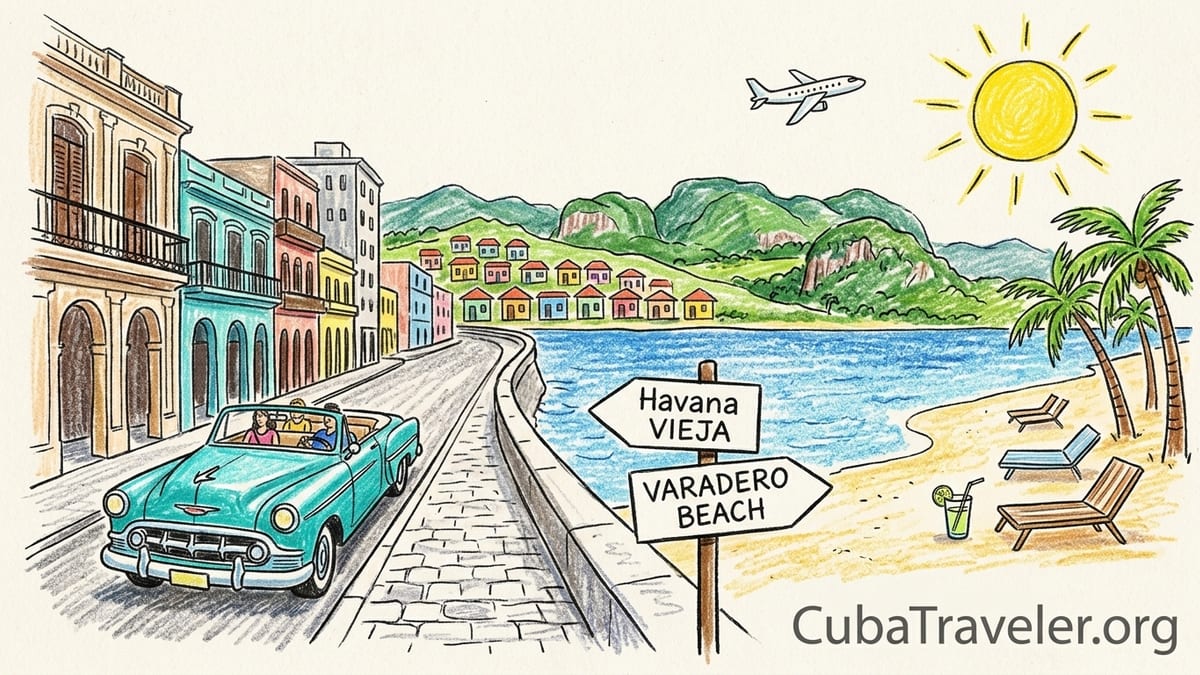
Cuba’s tourist visa, often called the “tourist card,” opens the door to Old Havana’s pastel streets, the tobacco valleys of Viñales and the beaches of Varadero. It does not, however, grant a blank check for any activity you might want to carry out while in the country. From remote work and journalism to scuba diving in marine parks, some plans are clearly tourist activities while others require a different immigration status or additional permits. This guide breaks down what you can usually do on a Cuban tourist visa, where the gray areas begin, and when you should seek formal authorization before you travel.
Understanding the Cuba Tourist Visa and Its Purpose
Cuba requires most visitors to obtain a tourist visa, commonly issued as a paper “tourist card,” before arrival. Official tourism portals and several foreign ministries describe this document as suitable for travel for pleasure, leisure and vacation, not for taking up employment or conducting professional activities. In practical terms, it is designed for travelers who want to book a Havana city break, a week in Varadero, or a circuit through Trinidad and Viñales, staying in hotels or licensed private guesthouses known as casas particulares.
The tourist card typically allows a single entry and a limited stay, often around 30 days for many nationalities, with the possibility of an in-country extension at an immigration office or sometimes via larger hotels. Exact durations and extension rules depend on your nationality and the issuing country’s agreements with Cuba, so travelers from Italy, Canada or Mexico may see slightly different validity rules on their documentation. What remains consistent is that the status is categorized as tourism and does not convert into a right to live, work or study in Cuba.
Cuba’s own tourism FAQs describe travel on a tourist visa as intended for “pleasure or recreation” and, in some cases, organized tourism programs contracted with agencies that work under the Ministry of Tourism. That framing reflects how Cuban authorities differentiate between someone who spends two weeks sightseeing around Old Havana and a person who comes to film a documentary or conduct academic fieldwork. The first case fits squarely within tourism. The second may require separate permissions from other ministries or specialized offices, even if the visitor technically holds a tourist card.
Because the tourist visa is tied to the purpose of the trip, immigration officers at Havana’s José Martí International Airport or regional airports in Varadero, Holguín or Santa Clara may ask about your planned itinerary. Simple explanations such as staying at a casa particular in Centro Habana, visiting the Malecón, taking a day trip to Viñales or relaxing at an all-inclusive in Varadero align with the expected scope of tourist activities. More complex plans, especially involving work or organized projects, should be checked with a Cuban consulate before departure.
Typical Activities That Clearly Fit Tourist Status
Most classic Cuba itineraries fall comfortably within what the tourist visa is meant to cover. Exploring Old Havana’s historic center, a UNESCO World Heritage Site, is a textbook example of tourism. Visitors stroll along Calle Obispo, step into restored plazas like Plaza Vieja and Plaza de la Catedral, tour the Museum of the Revolution, and finish the day with live music at a bar in Habana Vieja. Booking a guided walking tour through a licensed local operator, hiring a vintage American convertible for a one-hour Malecón ride, or visiting the fortress of Castillo del Morro are all considered ordinary tourist activities.
Cultural journeys to colonial cities such as Trinidad also sit comfortably under tourist status. Many travelers base themselves in a private casa near Trinidad’s Plaza Mayor, join a half-day guided visit to the historic core, and then book excursions into the nearby Valle de los Ingenios or to Playa Ancón for the afternoon. Paying entrance fees to museums, going to a state-run cultural venue like Casa de la Música in Trinidad, or attending a folkloric dance performance are all recognized as tourism when you are simply a member of the audience.
Nature and rural excursions, if organized with authorized providers, are likewise treated as tourism. In Viñales, a popular option is a half-day horseback or walking tour through the tobacco-growing valleys to visit a small farm, see how tobacco leaves are dried in traditional barns and drink a coffee with the farmer. Travelers typically book these tours through local guides, casas particulares or tour desks in Havana, and pay a straightforward fee that covers guiding and sometimes lunch. As long as you are a paying visitor and not providing services to the farm or the tour operator, your role is tourist, not worker or volunteer.
Beach holidays, whether in Varadero, Cayo Coco or Cayo Santa María, are the most straightforward fit for a tourist visa. Booking an all-inclusive resort, spending days on the sand, taking hotel-organized snorkeling trips to nearby reefs, and joining a catamaran sunset cruise are all seen as recreational activities. Visiting museums in Havana, touring rum distilleries that accept visitors, or joining an authorized day trip to the Bay of Pigs to snorkel over shallow reefs similarly fall into the category of ordinary tourism when arranged through licensed agencies or registered guides.
When Tourism Becomes Work: Remote Jobs, Journalism and Other Professional Activities
The line between pure tourism and work is often blurred in the age of laptops and global connectivity, but Cuban regulations still distinguish carefully between visitors who are on holiday and those who are in the country to carry out professional activities. Working remotely from an Airbnb-style casa particular in Havana for a foreign employer may feel low impact to the traveler, yet it is not automatically permitted just because salary is paid abroad. Cuba does not currently advertise a digital nomad visa or clear remote work authorization, and immigration statuses are still framed in traditional terms such as tourist, student, resident or accredited foreign correspondent.
Travelers considering several weeks in Havana while logging into a full-time job in Europe or North America should be aware that local law does not explicitly endorse this arrangement under tourist status. Some consular advisories note that visas aimed at tourism do not grant a right to work and that any form of remunerated activity may require a work or residence permit agreed with Cuban authorities. Because regulations can change and are not always fully detailed online, the prudent approach is to verify with a Cuban consulate or embassy before you rely on remote work as the basis for a long stay. It is especially important not to state “working remotely” as your main purpose of visit on visa forms without prior confirmation that this is acceptable.
Journalism is an even clearer example where tourist status is usually not sufficient. The Italian Ministry of Foreign Affairs, for instance, explicitly warns Italian citizens that the Cuban tourist visa does not authorize journalistic or other professional activities and that correspondents or media workers must obtain appropriate accreditation. This reflects Cuba’s general approach to foreign press, where news organizations apply through Cuban government channels for credentials and work permissions. An Italian photographer arriving with long lenses to cover political events for a newspaper, or a freelance reporter planning interviews on sensitive topics, should not attempt to enter as a simple tourist without prior authorization.
Other professional categories follow similar logic. Commercial filming for advertising campaigns, television shows or branded social-media content often requires a filming permit from Cuban authorities in addition to the appropriate visa category. Professional photographers shooting paid weddings on Varadero beach, fashion editorials in Old Havana or catalog campaigns in Trinidad may be seen as doing business rather than merely taking personal holiday snaps. Academic researchers carrying out structured fieldwork, NGO staff implementing projects, or doctors volunteering in clinics are all engaging in organized professional or quasi-professional activity that goes beyond what a tourist visa is meant to cover.
Family Visits, Partners, Friends and Long Stays
Many trips to Cuba are not classic holidays but visits to family members, romantic partners or close friends. Whether these visits fit neatly under “tourism” depends on nationality, duration and the purpose of the stay. A Canadian traveler who spends ten days in Havana staying at a licensed casa particular while visiting a Cuban partner, eating out, sightseeing and going to the beach is often still treated as a tourist by Cuban immigration, particularly if they hold a standard tourist card and engage in normal leisure activities during their visit.
Situations become more complex when stays are longer or more focused on family life than travel. For example, an Italian citizen planning to spend three or four months living with Cuban in-laws in a residential neighborhood of Santiago de Cuba may find that a standard tourist card is initially issued for a shorter period, requiring in-country extensions or a change of status. Some foreign nationals married to Cubans or with close family ties pursue residency or family-reunification routes through the Ministry of the Interior, which are separate from tourism and involve additional paperwork, health checks and local registration.
Staying in a private home that is not licensed as a casa particular can also raise issues. Cuba generally expects foreigners on tourist visas to stay in state hotels or in guesthouses and apartments that are formally registered to host international visitors and pay the relevant taxes. A traveler who spends their entire visit in an unlicensed private house, even if it belongs to their partner or relatives, might run into compliance questions if authorities discover that the property is not authorized to host foreigners. When in doubt, it is safer for non-resident visitors to book licensed accommodation and then spend time with friends and family during the day.
For travelers with dual nationality or Cuban heritage, options can change again. Some people with Cuban citizenship or residency may enter on Cuban documents and are then treated differently from foreign tourists for immigration and local purposes. Others, such as children of Cuban parents who do not hold Cuban citizenship, may still need a tourist card but could be eligible for different stays in future if they pursue residency. Because these scenarios are very fact specific, anyone planning an extended family-based visit should speak directly with a Cuban embassy or consulate rather than assuming that the tourist visa category is always the right fit.
Restricted Zones, Protected Areas and Activities Requiring Extra Permits
Having a valid tourist visa allows you to enter Cuba and move around much of the country, but it does not grant unrestricted access to every location or activity. Certain zones are restricted for security reasons, including military installations, some port facilities and areas close to sensitive infrastructure. Attempting to enter or photograph such sites, even accidentally, can lead to questioning by authorities. Travelers driving rental cars who stray onto unsigned military roads near bases, or who attempt to fly consumer drones near government buildings, may quickly discover that a tourist card is not a blanket permission to go anywhere or film anything.
Cuba also has protected natural and marine areas where additional rules apply. National parks such as Alejandro de Humboldt National Park in the east, or marine protected zones off Jardines de la Reina, often require entry fees and sometimes licensed guides. A traveler who wants to go beyond a basic hiking trail or beach area into core conservation zones might need specific authorization from park management, even if they already hold a tourist visa. Diving operations in these areas are typically run by state-affiliated or licensed centers, and independent diving without a recognized local operator can be restricted or prohibited.
Scuba diving and snorkeling are classic tourist activities when booked through recognized operators in Varadero, the Bay of Pigs, or off Cayo Largo. However, certain dives within marine parks or near archaeological sites, such as submerged shipwrecks, may require specialized permits for the operator and sometimes for the individual diver. Commercial or technical diving, including film or research dives, almost always demands coordination with Cuban authorities beyond the standard tourist framework. If you plan to shoot underwater footage for a documentary, run paid dive training, or conduct marine research, you should not assume that a tourist card is sufficient authorization.
The same principle applies on land for activities like commercial photography, scientific research and regulated excursions. A visitor who casually photographs street life in Centro Habana is operating as a tourist. A production team with lighting trucks on the Malecón, models dressed in branded clothing and a full schedule of shooting for an international advertising campaign is carrying out commercial work that normally requires filming permissions and possibly a different visa category. Archaeological excavations, even those that welcome academic visitors, are controlled environments where participation as a researcher or volunteer is not covered by simple tourist status.
Volunteering, Paid Events and Informal Work
Many travelers are drawn to the idea of “giving back” during their trip, whether by volunteering with a community project, teaching languages or helping with rural initiatives in areas like Pinar del Río or Guantánamo. In Cuba, however, structured volunteering typically falls into a gray area that is more than tourism but less than formal employment. If you sign up with an organization to teach English, renovate buildings, or assist with social programs, you may be participating in organized work that local authorities do not consider compatible with an ordinary tourist visa.
Paid events are another sensitive zone. A DJ who accepts a fee to play at a bar in Havana, a musician who performs for ticketed audiences in Trinidad, or a yoga instructor leading a paid retreat at a beach resort in Cayo Coco is effectively working in Cuba, regardless of where the money is paid. Even if the bar pays through a foreign bank account or the yoga students transfer money abroad, Cuban authorities could interpret the activity as professional work carried out on their territory. Organizers of retreats, workshops or festivals should seek clarification on whether their event requires a special authorization, and individual participants should be cautious before accepting paid roles while on a tourist visa.
More informal arrangements can still be problematic. For instance, if a foreign traveler regularly guides other tourists around Havana for tips, offers photography sessions on the Malecón for payment or sells handmade goods to visitors in Viñales, they are blurring the distinction between visitor and unlicensed worker. Cuba, like many countries, regulates commercial activity and expects foreigners who work on its soil to hold the appropriate status. Relying on a tourist card while building an income stream in the local economy risks immigration issues, fines or future entry problems.
By contrast, small-scale cultural exchange that does not involve organized projects or payment generally stays within tourism. Joining a free neighborhood baseball game in Santa Clara, bringing donated books to friends, or cooking a meal together in a casa particular are part of normal social interaction. Difficulties tend to arise when there is a pattern of structured service, clear economic value or affiliation with a foreign organization that goes beyond the spirit of a holiday visit.
Special Considerations for Travelers Under U.S. Jurisdiction
Visitors who are subject to U.S. jurisdiction face an additional layer of rules that exist separately from Cuban immigration law. From Cuba’s perspective, a U.S. passport holder who arrives with a valid tourist card and satisfies entry requirements is often treated much like any other foreign tourist at the border. Under U.S. law, however, travel to Cuba for tourist activities is still restricted. The U.S. Treasury Department’s Office of Foreign Assets Control regulates transactions involving Cuba and only authorizes travel that falls into specific categories such as family visits, journalistic activity, professional research and meetings, educational programs, religious activities, humanitarian projects or support for the Cuban people.
In practice, that means an American who books a week in Varadero simply to lie on the beach with no structured purpose could be in violation of U.S. regulations even if Cuban immigration welcomes them on a tourist visa. Many U.S.-based travelers use the “support for the Cuban people” category and design itineraries focused on staying in privately owned casas particulares, eating at paladares (private restaurants) and booking tours directly with independent guides. The important point is that OFAC rules look at the nature of your activities and expenditures, not at the Cuban visa label. Cuban tourist status does not override U.S. sanctions requirements.
For U.S. jurisdiction travelers who also want to work remotely, do research or engage in professional projects, the picture becomes more complicated. An American academic carrying out structured interviews for a study might qualify under “professional research,” but they would need to ensure that their activities meet OFAC conditions and that they keep the required records of their time in Cuba. A U.S.-based content creator filming monetized travel videos or branded posts may find that their work blurs into journalistic or commercial activity, raising questions both under Cuban rules and under U.S. sanctions. In any case, what is allowed by Cuban immigration can still be prohibited by OFAC, and violating U.S. rules can lead to fines or other penalties after you return home.
Airlines and cruise lines serving Cuba from the United States usually require passengers to declare an appropriate OFAC category when booking and may refuse transport to travelers who indicate “tourism” as their purpose of travel. Separate from that, U.S. citizens and residents are expected to keep records of their Cuba-related transactions for several years in case of future audits. Before planning a trip based purely on Cuban tourist visa rules, travelers under U.S. jurisdiction should review the most recent guidance from OFAC or speak with a qualified advisor to understand the intersection of Cuban entry law and U.S. sanctions.
Permitted Tourism vs Activities Requiring Extra Authorization
Because the same physical activity can fall into different legal categories depending on intent, payment and organization, it is helpful to think in pairs of contrasting examples. A traveler wandering through Old Havana taking photos on a smartphone for a personal album is clearly acting as a tourist. A commercial crew with multiple cameras, reflectors and models shooting a fashion lookbook on those same streets is conducting a professional production that Cuban authorities may require to be formally authorized. Both use cameras in Old Havana, yet only one scenario aligns neatly with the expectations of a tourist visa.
Consider the countryside around Viñales. Booking a two-hour guided horseback ride through the tobacco fields, paying a fixed price in cash and perhaps buying some coffee or fruit at a farm is mainstream tourism. By contrast, coordinating a multi-week volunteer project in which foreign visitors provide unpaid labor in the fields or implement an NGO-funded program in local schools would likely demand cooperation with Cuban institutions and a status beyond tourism. Similarly, staying at an all-inclusive in Varadero and joining the resort’s standard snorkeling excursion is very different from organizing a paid underwater photography workshop where participants expect to earn income from their images or promote a brand.
Remote work falls into this comparative framework as well. Checking personal emails, posting holiday photos from a café with patchy Wi-Fi and joining a brief video call to resolve an urgent issue at work are incidental activities that most immigration systems tolerate from tourists. Running a full-time job from Cuba, with regular business meetings, deliverables and an employer who expects you to be based there for several months, looks much closer to a work stay. If Cuban immigration ever connects the purpose of your long visit to a structured professional role, they may question whether a tourist visa is still appropriate.
For travelers planning anything that might edge toward professional activity, the safest strategy is transparent preparation instead of improvisation. Contacting a Cuban embassy to ask whether your planned commercial shoot, research project, workshop or long-term remote work stays within tourist rules can help prevent unpleasant surprises at the border. Likewise, travelers from countries that publish specific warnings about professional activity, such as Italy’s guidance on journalism and other paid work, should take those notices seriously as reflections of how Cuban authorities interpret tourist status in practice.
The Takeaway
A Cuban tourist visa is a flexible tool for leisure travel, enabling everything from classic Havana city breaks and Trinidad heritage trips to Viñales farm tours and Varadero beach holidays. Within that frame, activities like museum visits, guided city walks, snorkeling from licensed boats, attending live music shows and staying in registered casas particulares fall squarely within what Cuban authorities expect tourists to do. Most visitors who limit themselves to those experiences will rarely think about immigration categories again after clearing passport control.
Challenges arise when paid work, organized volunteering, formal research or commercial production enters the picture. Remote work for a foreign employer, journalism, professional photography, large-scale filming, academic fieldwork or paid cultural events are not automatically authorized simply because the traveler holds a tourist card or is paid abroad. Some governments, including Italy, explicitly note that tourist status in Cuba does not cover professional activities, reinforcing the message that specialized visas or local permits may be required.
Personal visits to partners, friends and family sit somewhere in between. Many such trips are effectively tourism, especially when they are short and based in licensed accommodation. Longer stays and quasi-residential arrangements may demand more careful planning or even different immigration pathways, particularly for those with Cuban spouses or close family ties. Across all of these scenarios, the most reliable approach is to define your main purpose of travel clearly, match it to the appropriate visa type and seek guidance from Cuban consular authorities well before departure.
For travelers under U.S. jurisdiction, there is the added responsibility of complying with OFAC’s categories of authorized travel, which operate independently of Cuban visa labels. A trip that is fully acceptable to Cuban immigration can still be problematic under U.S. sanctions if it is purely touristic. Understanding both Cuban and home-country rules, and adjusting your itinerary and documentation accordingly, helps ensure that your Cuban trip remains memorable for the right reasons: sunset walks on the Malecón, the sound of son music in a Trinidad courtyard, and the scent of tobacco leaves drying in the Viñales sun.
FAQ
Q1. Does a Cuba tourist visa allow me to work remotely for my foreign employer?
In general, the Cuban tourist visa is intended for leisure travel, not work. Cuba does not actively promote a digital nomad or remote work visa, and local rules still distinguish between tourists and people who carry out professional activities in the country. Briefly checking emails or handling occasional urgent tasks is usually tolerated in practice, but planning a full remote job from Cuba for weeks or months should not be assumed to be authorized. Travelers considering this should ask a Cuban embassy or consulate in writing whether their specific plan is compatible with tourist status.
Q2. Can I do journalism or professional photography in Cuba on a tourist visa?
Cuba generally expects foreign journalists and media professionals to hold appropriate accreditation rather than entering as simple tourists. Some foreign ministries, such as Italy’s, explicitly warn that the tourist visa does not authorize journalistic or other professional activities. Casual holiday photography is fine, but reporting for news outlets, shooting commercial campaigns or covering sensitive topics typically requires prior authorization from Cuban authorities and sometimes a different immigration status.
Q3. Are typical sightseeing and beach activities fully covered by a tourist visa?
Yes. Classic tourism such as walking tours of Old Havana, visits to museums, cultural excursions in Trinidad, tobacco-farm trips in Viñales, snorkeling trips organized by licensed operators and beach stays in Varadero or the northern cays all fall within what the tourist visa is meant to cover. Booking tours through recognized agencies, hotels or casas particulares helps ensure that you remain within the realm of authorized tourist activity.
Q4. Do I need extra permits for diving or nature excursions in Cuba?
Basic recreational diving and snorkeling sold by authorized dive centers and tour operators are generally covered as tourist activities. However, dives inside certain marine parks, trips to sensitive ecosystems and any kind of technical or commercial diving may require special permits and coordination with Cuban authorities. Similarly, entry to some national parks and protected areas is controlled through official gates and guides, and going beyond ordinary visitor trails can require additional authorization that sits on top of your tourist visa.
Q5. Can I volunteer or join a humanitarian project while in Cuba on a tourist visa?
Informal, unpaid help for friends or small community gestures usually pass unnoticed, but structured volunteering through organizations, teaching, construction projects or long-term humanitarian work are not automatically compatible with tourist status. These activities often resemble employment or organized programs, which may demand a different visa category or specific agreements with Cuban institutions. If your primary purpose in visiting Cuba is to volunteer, you should seek guidance from the host organization and a Cuban consulate before you travel.
Q6. How are family and romantic-partner visits treated under Cuban immigration rules?
Short visits to partners, friends or family members are often handled as tourism, especially when travelers stay in licensed casas particulares or hotels and engage in normal leisure activities. Longer stays focused on family life, or situations where a foreign visitor effectively lives in a private home for months, may require a different status or repeated extensions. Some people with Cuban spouses or close relatives eventually apply for residency-type arrangements. Because these cases are personal and complex, it is important to seek individualized advice from Cuban consular officers.
Q7. Does a tourist visa let me go anywhere I want in Cuba?
No. A tourist visa authorizes entry and general travel but does not override restrictions on military zones, certain port or industrial facilities, some government buildings, protected marine environments or controlled archaeological sites. Access to these areas can be limited to experts, accredited media, researchers or specially permitted groups. National parks and reserves may also have rules about where visitors can go without a guide. When in doubt, rely on recognized tour operators or ask local authorities before entering sensitive areas.
Q8. What should travelers under U.S. jurisdiction know about Cuba tourist activities?
Even if Cuba admits you on a tourist visa, U.S. law still restricts travel for pure tourism. People under U.S. jurisdiction, including U.S. citizens and residents, must fit their trip into one of the OFAC-authorized categories, such as family visits, educational activities or support for the Cuban people. Booking a simple beach vacation with no qualifying purpose may violate U.S. sanctions, regardless of Cuban immigration rules. Before traveling, review current OFAC guidance or consult a qualified professional to align your activities with a valid category.
Q9. Can I film monetized travel content or run paid workshops as a tourist?
Filming ordinary travel videos for a personal channel, without contracts or organized shoots, tends to be seen as normal tourism. However, if you are producing sponsored content, running film workshops, shooting advertising or selling photo sessions to clients, Cuban authorities may view your trip as professional rather than touristic. Those kinds of commercial projects often require specific filming or business permissions, and relying only on a tourist visa could lead to problems if the activity comes to official attention.
Q10. How can I check whether my planned activities are allowed under tourist status?
The most reliable approach is to describe your exact plans to a Cuban embassy or consulate and ask whether they fit within a tourist visa or require another category. Include details such as length of stay, whether you will be paid, who is organizing any projects, and whether your work will be published or commercialized. Keep any written reply for your records. This proactive step is especially important if you plan remote work, journalism, research, volunteering, commercial photography, large events or anything that goes beyond simple sightseeing and relaxation.