


Planning a trip to Cuba in 2026 is no longer just about chasing winter sun or off-season airfares. The island’s classic dry and wet seasons still matter, as does the official Atlantic hurricane season from June 1 to November 30. But the real calculation now also includes a deep energy and fuel crisis, rolling nationwide blackouts, and a confirmed high level of dengue transmission. Choosing when to go is about balancing climate, storms, mosquitoes and the very practical question of whether electricity, water, transport and healthcare will function reliably enough for the kind of trip you have in mind.
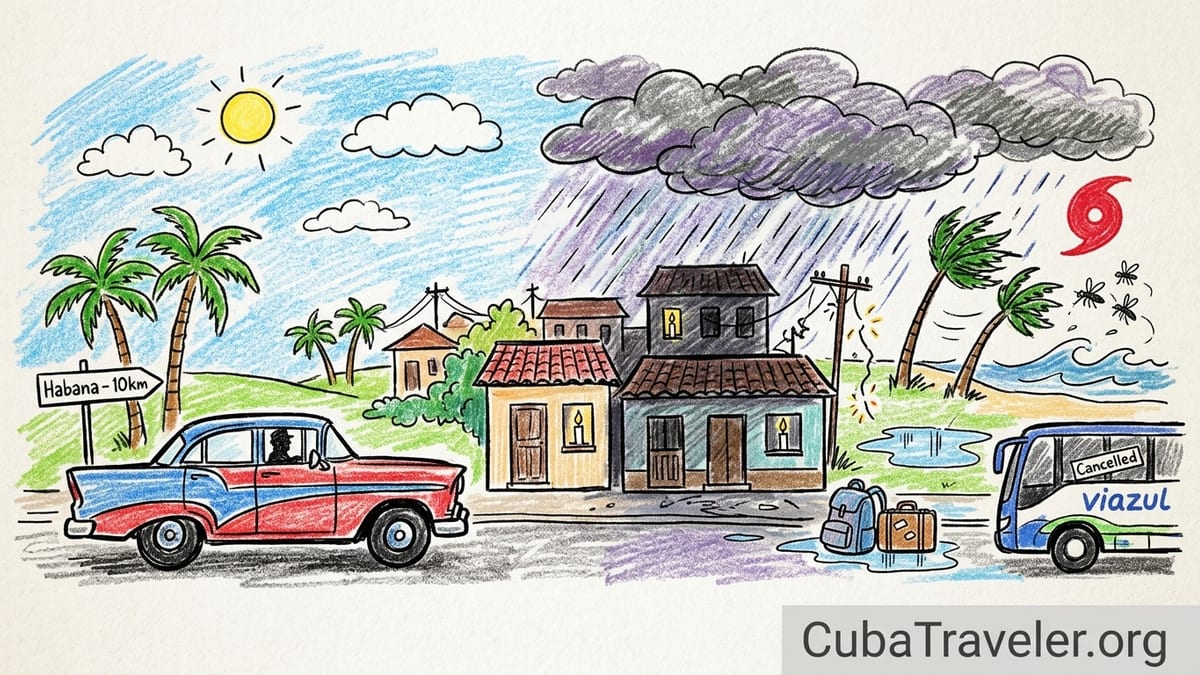
How Cuba’s Seasons and Current Crises Interact
Cuba’s traditional travel calendar is straightforward. From roughly November to April the island is drier and less humid, with cooler nights and fewer heavy downpours. From late spring into October, heat and humidity rise, showers become more frequent and intense, and the risk of tropical systems increases. The official Atlantic hurricane season runs from June 1 through November 30, with a well documented climatological peak around September 10 and most activity occurring from mid August to mid October. That pattern still holds in 2026, but it is only half the story.
Since 2024 the country has been experiencing a severe energy and fuel crisis. In 2026 there have been repeated nationwide collapses of the electrical grid, with millions losing power for hours or days at a time. Reports from news agencies describe at least several island wide blackouts this year alone, with some residents in Havana facing more than 16 hours a day without electricity even outside of storm events. Power cuts disrupt air conditioning, refrigeration, running water in many buildings, internet access and even traffic lights, and they directly affect travelers staying in casas particulares as well as in some hotels.
This energy shortage sits on top of a wider economic crisis. Official assessments and foreign travel advisories describe fuel shortages that slow or halt bus services, reduce domestic flights and limit taxi availability. In 2026, for example, some European airlines temporarily suspended flights into Havana due to jet fuel scarcity. Blackouts and fuel shortages also raise the risk that municipal water pumps, hospital generators and mobile networks may fail during or after a storm. When you think about hurricane risk in Cuba this year, it is not just the wind and rain but how these hazards interact with already stretched infrastructure.
Dengue fever adds another layer. On October 7, 2026, the United States Centers for Disease Control and Prevention classified Cuba as a high transmission destination for dengue, noting at least ten or more cases detected among recent travelers in the prior three months. That designation is independent of the weather calendar: even in the drier winter months, dengue risk is elevated enough that mosquito precautions are recommended year round. Seasonal patterns still influence how uncomfortable the heat feels and how often you encounter standing water, but they no longer define a “safe” or “unsafe” dengue season in a simple way.
January: Comfortable Weather, Uncomfortable Shortages
January is usually one of the most pleasant months to be in Cuba from a purely climatic perspective. Daytime temperatures in Havana and the north coast were historically in the mid 70s to low 80s Fahrenheit, with cooler evenings that make walking the Malecón or exploring Old Havana easier. Rainfall is relatively low, humidity is more moderate than later in the year, and the Caribbean Sea is warm enough for swimming without the oppressive stickiness of July and August. Sea conditions around Varadero or the Cayos tend to be calm, although occasional cold fronts can bring a few choppy days.
From a flooding and storm perspective, January is outside the official hurricane season and has a low probability of tropical cyclones. Heavy multi day rain events are less common, so urban flooding in Havana or Santiago is usually limited to localized downpours and poor drainage spots. That makes January attractive for road trips along the autopista or the central highway toward Trinidad and Cienfuegos, provided fuel is available. However, recent months have shown that power and fuel shortages do not respect seasons. Travelers in early 2026 reported regular blackouts in Havana and smaller cities even in the cooler months, with some neighborhoods losing power and water service for several hours a day.
January’s mosquito exposure is lower than in the wet season but far from zero. Dengue carrying Aedes mosquitoes breed in small containers and urban water storage, not only in swamps or jungle. Because many Cuban households now rely on stored water due to intermittent supply, mosquito breeding can remain high even in drier weeks. With the CDC’s current high transmission classification, travelers in January should pack repellent with DEET or picaridin, light long sleeves for evenings and, ideally, a bed net if they plan to stay in budget guesthouses where screens and air conditioning might fail during outages.
Service reliability in January 2026 is mixed. Some higher end Havana hotels run their own generators and prioritize air conditioning and lifts, but even these can fail when fuel deliveries are disrupted. Independent travelers using intercity buses like Viazul have faced last minute schedule changes, and there have been documented interruptions to internet card sales and payment processing. January remains one of the more comfortable months weather wise, but it cannot solve the underlying electricity, transport or healthcare shortages. Travelers should plan with redundancy in mind, such as printed copies of documents, extra cash in euros or Canadian dollars, and flexible itineraries that can absorb canceled buses or temporary clinic closures.
February and March: Peak Comfort, Persistent Systemic Risk
February and March typically offer Cuba’s most settled weather. Skies are often bright, humidity relatively low by Caribbean standards, and rainfall modest across most regions. In Havana and along the northwest coast, afternoons are warm enough for the beach while evenings remain comfortable without needing constant air conditioning. Inland destinations like Viñales, with its limestone mogotes and tobacco farms, are especially appealing in these months, since trails dry out quickly after showers and the heat during daytime hikes is less punishing than in late spring.
The risk of hurricanes or tropical storms in February and March is very low compared with the second half of the year. There are occasional cold fronts bringing gusty winds and rougher seas, so swimmers should still respect red flags and local warnings about rip currents, particularly on less patrolled stretches of beach. Flooding potential in urban areas is generally limited but not zero, since aging drainage infrastructure can struggle even with short cloudbursts. Overall, these months are still the best bet for avoiding extreme weather disruption to flights and ferries.
Dengue and mosquito exposure, however, remain a year round concern under the 2026 high transmission designation. Travelers to popular neighborhoods like Centro Habana or Vedado, where water cuts often force residents to store water on rooftops and balconies, may find mosquitoes active even on relatively dry days. In smaller towns, rural yards with old tires and buckets can serve as breeding grounds. February and March are good months to take full advantage of screened windows, fans, and the chance to sleep under a light sheet rather than sweating without power, but repellent and basic infection avoidance measures are still important.
Service reliability in late winter continues to be shaped by the national energy crisis rather than weather. Official and academic analyses in 2026 describe sustained fuel shortages since early in the year, repeated nationwide blackouts and rationing of electricity for government services. For visitors, this can mean anything from a romantic candlelit dinner when the lights go out in Trinidad’s historic center to very practical problems, such as ATMs being offline or card terminals at state run hotels not working. Before booking, it is worth contacting accommodations directly to ask how they manage outages, whether they have a generator, water tanks and gas for cooking, and how recent blackouts have affected them. February and March may be peak comfort months but they are still embedded in a high risk infrastructure context.
April and May: Heat Building and Rains Returning
By April, Cuba begins to transition out of the dry season. Temperatures climb, especially inland and in the east, and humidity creeps up. In Havana and Varadero, afternoons can feel noticeably hotter than in February, and evenings start to retain more warmth. Rainfall is still moderate overall but isolated heavy showers become more common, especially late in the day. These can lead to brief street flooding in low lying parts of cities where drainage is blocked. Sea temperatures continue to warm, which is good for swimmers and divers around Jardines de la Reina or Cayo Coco, but calm days may be interspersed with squalls.
By May, the wet season is effectively underway. Downpours become heavier and more frequent, often arriving in bursts that can overwhelm gutters and side streets. The risk of flash flooding increases in cities like Santiago de Cuba, where steep hills channel water quickly into lower neighborhoods. Rural roads can develop potholes and muddy sections, complicating travel by rental car or shared taxi. Official hurricane season has not started yet in April and only begins on June 1, but tropical disturbances can occasionally appear earlier. While the probability of a full tropical cyclone hitting Cuba in May is still relatively low, the atmosphere is trending toward more convective storms.
These late spring months are also important for mosquito dynamics. Warmer temperatures and more standing water from repeated showers provide ideal breeding conditions for Aedes mosquitoes. In urban Havana, plastic containers on balconies, construction sites with puddles, and partially covered cisterns all become risk points. In the countryside, rice paddies and roadside ditches can harbor larvae. Given the CDC’s high dengue transmission classification as of October 2026, travelers in April and May should consider this a period of rising mosquito pressure. Using repellent throughout the day, not just at dusk, and choosing accommodation with intact screens or air conditioning becomes more important.
Service reliability can become more fragile as heat and demand for cooling rise. Power plants already struggling with limited fuel supplies face peak loads as residents turn on fans and air conditioning units. Several major blackouts in 2026 have occurred in warmer months, when the grid was under stress. For travelers, that may translate into losing refrigeration at casas for half a day, inconsistent water pressure for showers and reduced mobile coverage if cell towers lose power. When planning an April or May trip, it is prudent to build in extra buffer times for bus connections and to carry bottled water and snacks since restaurants and kiosks can close suddenly during outages.
June to August: Hot, Humid and Within Hurricane Season
From June through August, Cuba is hot, humid and squarely inside the official Atlantic hurricane season that runs from June 1 to November 30. Daytime temperatures often climb into the high 80s or low 90s Fahrenheit, and with high humidity the heat index can feel several degrees hotter in Havana, Cienfuegos and Santiago. Nighttime offers less relief, which means that air conditioning or at least strong fans become important for comfort. For travelers staying in guesthouses that lose power for many hours, sleeping can be difficult, especially in interior rooms with limited airflow.
Rainfall increases markedly in these months. Afternoon downpours and thunderstorms are frequent, particularly in the interior and on the south coast. When tropical waves pass through, rainfall can last for many hours, flooding streets, inundating low lying coastal roads and affecting intercity buses. The sea around low lying beach resorts, for example on Cayo Santa María or parts of the north coast, can become rough during these systems, bringing strong rip currents and turbidity that spoils snorkeling visibility. Even without an organized storm, localized flooding can disrupt road travel, cause brief landslides in hilly areas and overwhelm drainage in older neighborhoods.
Hurricane risk in June, July and August is real, even though climatology shows that the absolute peak of Atlantic activity occurs around September 10. Some famous historical hurricanes affecting Cuba, such as early season storms in June, underline that the start of the season is not risk free. In practice, this means travelers should monitor storm outlooks before and during their trips. Storm watches and hurricane warnings can lead to flight disruptions, port closures for ferries and strict rules at hotels, such as shuttered windows and temporarily suspended excursions. With Cuba’s current fuel and electricity shortages, post storm recovery can be slower, as authorities struggle to power pumps, clear roads and restore communications.
Mosquito exposure during these high heat months is intense. The combination of warm temperatures, frequent standing water and often inconsistent municipal waste collection creates ideal mosquito habitats in both cities and rural areas. Travelers receiving up to date advice from the CDC in October 2026 will see Cuba listed as high transmission for dengue, and that designation is especially important during the heart of the rainy season. Long clothing made of breathable fabrics, reliable repellent and, where possible, air conditioned rooms become key protective measures. It is also wise to choose lodging that demonstrates active mosquito control, such as covered water tanks and regular inspections.
Service reliability in June through August is likely to be under maximum stress. Heat raises electricity demand, heavy rain exposes weaknesses in the grid and roads, and hurricanes or strong tropical storms can trigger new nationwide blackouts. Recent reporting from international agencies has described repeated grid collapses in mid year, sometimes leaving millions without power and prompting protests over prolonged outages. For visitors, that may mean canceled domestic flights due to lack of jet fuel, disrupted airport operations when backup generators fail, or medical clinics operating on limited capacity. Anyone considering travel in these months should have robust travel insurance, a clear exit plan if flights are delayed for days, and a realistic tolerance for disruption.
September and October: Peak Cyclone Preparedness
September and October are the critical months for cyclone preparedness in Cuba. Long term Atlantic hurricane climatology shows that overall activity in the basin peaks around September 10, and that the majority of major hurricanes have historically occurred between August and October. While no one can say whether a particular beach town in Cuba will be hit during a specific week, the statistical chance of strong storms passing near or over the island is highest in this window. In recent years, significant hurricanes in early to mid October have battered eastern and central provinces, leaving long recovery tails for power, housing and agriculture.
Weather during September and October is dominated by heavy rains, high humidity and often unsettled seas. Multi day rainbands from passing tropical storms can saturate soils and trigger flooding along rivers and in urban basins. Coastal areas, especially on the south and central north coasts, can see storm surge and coastal erosion during strong systems. Rough seas and dangerous rip currents are common even when storms stay offshore, which leads authorities to close beaches or restrict swimming. Flight disruption is also an important consideration: regional and international airlines may divert or cancel flights into Havana, Varadero or Santiago days in advance of a forecast landfall, and airports close when winds exceed safe operating thresholds.
Mosquito risks remain high in September and October. Continuous or intermittent rainfall produces abundant standing water in yards, construction sites, abandoned lots and informal dumps. Combined with the CDC’s confirmation that Cuba is currently a high dengue transmission country, this means travelers should treat these months as among the highest risk for mosquito borne illness. The added complication is that flooding and blackouts during and after storms can force people to open windows for ventilation, or to shelter in crowded conditions where mosquito control is harder. In practice, travelers should be prepared to maintain repellent use even when staying indoors and to carry any personal medications they would need if medical care were delayed.
Cuba’s infrastructure challenges amplify the impact of storms in these peak months. Official and humanitarian analyses in 2026 describe how a U.S. oil embargo and pre existing underinvestment have left the island’s power plants short of fuel and spare parts. Repeated nationwide blackouts in mid 2026 occurred even without direct storm hits. When a hurricane or strong tropical storm does affect the island, it can knock out already fragile high voltage lines and leave communities without power and water for extended periods. Fuel shortages mean fewer trucks to clear debris, fewer functioning generators at clinics and hotels, and constrained capacity to deliver bottled water or food. Travelers visiting in September or October should have a clear understanding that if a major cyclone hits, they may face several days with limited services even in major cities.
For those who still choose to visit in this window, staying flexible is crucial. It is sensible to avoid tight connections, such as planning to arrive in Havana one evening and board a cruise or international flight the next morning. Instead, build in buffer days and monitor tropical outlooks from reputable meteorological services. Consider accommodations that have demonstrated hurricane procedures and backups, and keep in mind that local authorities may evacuate some coastal areas or enforce curfews when warnings are in effect. Preparedness in these months is not just about packing a rain jacket but about being willing to delay, reroute or even cancel legs of your journey when forecasts deteriorate.
November and December: Easing Weather, Persistent Structural Risk
November sits at the tail end of the official Atlantic hurricane season, which runs through November 30. Historically, the number of new tropical cyclones forming in the Caribbean and western Atlantic declines during this month, but notable November storms have still affected the region. In Cuba, early November can feel like a hybrid between wet and dry seasons. Temperatures start to dip slightly from the peak heat of September and October, and the frequency of afternoon thunderstorms decreases, especially toward the end of the month. However, heavy rain events and the occasional late season tropical storm remain possible, particularly in the first half of November.
From a rainfall and flooding perspective, travelers in early November should still be alert to multi day systems that can saturate the ground and lead to river flooding. By late November, conditions often improve, with more stable periods that resemble the traditional dry season. Sea conditions also begin to calm more consistently, although passing cold fronts can bring choppy days and rip current risks on northern beaches. Because November is still officially within hurricane season, airlines and Cuban civil defense authorities maintain full storm monitoring and response procedures, which can translate into temporary airport closures or evacuations if a late system threatens.
December, by contrast, is one of the climatically easiest months to be in Cuba. Rainfall is comparatively low, humidity more moderate, and days are warm without being overwhelming. The risk of tropical cyclones is very low once the season ends on November 30, and cool northerly breezes can make evenings pleasant in Havana, Trinidad and Cienfuegos. These conditions are attractive for walking tours, classic car rides and cycling excursions. Flooding potential is generally limited to localized heavy showers. Seas are typically inviting for swimmers and divers, though strong northerly winds can still cause rough days on the north coast.
Neither November nor December, however, can be considered fully safe months in 2026 while Cuba’s infrastructure problems remain acute. Blackouts documented by international media as recently as September have shown that the national grid can collapse without warning, plunging large areas into darkness and shutting down water pumps, telecoms and fuel distribution. Fuel shortages described by travel advisories and humanitarian assessments persist regardless of season, affecting the availability of interprovincial buses, domestic flights and even taxis in tourist hubs. Travelers in December might enjoy balmy evenings in Old Havana yet still find that their guesthouse loses power for several hours, that online payments fail or that a planned side trip to Santiago is canceled because the long distance bus lacks fuel.
Dengue risk extends unchanged into November and December under the current CDC classification. Cooler nights may reduce mosquito activity slightly, but stored water and urban breeding sites continue to support Aedes populations. Travelers should not let comfortable weather lull them into skipping repellent or leaving windows unscreened. At the same time, December’s relatively benign climate can make it easier to cope with outages. Sleeping without air conditioning is less punishing, and travelers can comfortably spend evenings outdoors where breezes may reduce mosquito density. This makes December a reasonable compromise month for those who prize weather comfort but who also accept that electricity, fuel and even some medicines may be in short supply during their stay.
Monthly Risk Table and How to Use It
The following narrative table summarizes relative risk by month, drawing together climate, storm, dengue and infrastructure factors. It is not a guarantee of conditions in any given year and it cannot predict whether a specific Cuban destination will be hit in a particular week. Instead, it is a planning tool to help you align your own risk tolerance with the realities on the ground in 2026.
January to March can be thought of as lower climatic risk with moderate to high systemic risk. Weather is generally dry, with comfortable temperatures, low flooding potential and calm seas. Dengue risk remains high because of the national classification, and infrastructure problems such as blackouts and fuel shortages continue independently of weather. April and May see rising heat and humidity, increasing rainfall and higher mosquito pressure, while still being outside the heart of hurricane season. Systemic risks remain moderate to high as the grid strains under growing demand.
June through August bring high climatic and systemic risk. They are hot, humid months firmly within hurricane season, with frequent heavy rains, high flooding potential in vulnerable areas, intense mosquito exposure and significant stress on electricity and water services. September and October represent the highest combined risk period. They sit at the climatological peak of Atlantic hurricane activity, with maximum cyclone preparedness required, very high mosquito and flooding risk and profound dependence on fragile infrastructure for any post storm recovery.
November occupies a transitional space, with moderate climatic risk early in the month while hurricane season is still officially open, tapering toward lower climatic risk by the end. Systemic risk remains high due to ongoing fuel and power constraints. December offers low climatic risk and more comfortable conditions but only moderate improvement in service reliability. Throughout the year, storm watches, hurricane warnings, flooding, rough seas and rip currents can all lead to flight disruptions and localized evacuations. The current combination of elevated official advisories, repeated nationwide blackouts and a high dengue transmission designation means that no month in 2026 can be described as completely safe.
The Takeaway
Choosing the safest time to visit Cuba in 2026 means accepting that you are working with layers of uncertainty. Climatic patterns are still useful. November through April are drier and more comfortable, while late spring through October are wetter, hotter and more likely to see intense storms. The official Atlantic hurricane season from June 1 to November 30, with a historical activity peak around September 10, remains a central reference point. Those aiming to minimize weather related disruption will likely gravitate toward January to March or December, accepting some residual risk of cold fronts and localized flooding.
At the same time, Cuba’s extraordinary infrastructure problems reshape what “safe” means. Chronic fuel shortages and repeated nationwide blackouts in 2026 have reduced the reliability of almost every service that travelers rely on: electricity in guesthouses and hotels, running water, internet, transport and parts of the healthcare system. Dengue risk, classified by the CDC as high transmission as of October 7, 2026, is effectively decoupled from the old notions of a low mosquito season and demands year round precautions. Hurricanes and strong storms now intersect with an already stressed system, making it harder to restore power, reopen roads and maintain communications after a hit.
In practice, safer travel to Cuba this year is less about finding a perfect month and more about honest risk assessment and preparedness. That might mean traveling in February but choosing accommodations with generators and water tanks, booking flexible airfares and carrying extra prescriptions. It might mean avoiding September and October unless you are comfortable potentially sheltering through a storm with limited backup services. No matter when you go, it is wise to stay closely informed through official advisories, buy robust travel insurance that includes medical evacuation and trip disruption, and keep your itinerary flexible enough to adapt when storms, blackouts or shortages intrude.
Cuba remains an extraordinary destination, with music in the streets of Havana, tobacco fields in Viñales and coral gardens off the south coast that still impress divers. In 2026, enjoying those experiences safely requires more planning than in years past. With a realistic understanding of the month by month risks and a willingness to adjust plans on the ground, many travelers will still find a visit worthwhile. But until energy, transport and health systems stabilize and official advisories ease, it is prudent to recognize that there is no completely safe month to visit, only months that may align better or worse with your own comfort level and risk appetite.
FAQ
Q1. Is there any truly safe month to visit Cuba in 2026?
There is no month that can be described as completely safe while energy, fuel and healthcare shortages persist and dengue transmission remains high. January to March and December usually offer the most comfortable weather, but blackouts, limited transport and medical constraints can still significantly affect a trip.
Q2. If I want to avoid hurricanes, when should I go?
The official Atlantic hurricane season runs from June 1 to November 30, with a historical activity peak around September 10 and most severe storms between August and October. Traveling outside these months reduces, but does not eliminate, storm risk. Late December through March is generally the least likely period for tropical cyclones to impact Cuba.
Q3. How serious is the dengue situation for travelers?
As of October 7, 2026, the CDC lists Cuba as a high transmission destination for dengue, based in part on cases among recent travelers. That means visitors should take dengue seriously year round by using effective mosquito repellent, wearing long sleeves and trousers when practical, choosing screened or air conditioned rooms and seeking medical advice if they develop fever after travel.
Q4. Are blackouts really that common in tourist areas?
Yes. In 2026 there have been several nationwide blackouts that affected Havana, Varadero and other major destinations, in addition to frequent rolling outages. Some large hotels have generators and can maintain basic services for a time, but many guesthouses and smaller establishments cannot. Even where backup power exists, fuel constraints can limit how long it runs.
Q5. Which months are best if I am sensitive to heat and humidity?
If you struggle with heat, focus on January, February, March and December, when temperatures and humidity are usually lowest. These months still feel warm and tropical, but they are noticeably more manageable than June through October. Even then, it is worth confirming that your accommodation has working fans or air conditioning and a plan for outages.
Q6. How do storms affect flights and transport inside Cuba?
Storm watches and hurricane warnings can lead to cancellations or diversions of international and domestic flights, temporary closure of airports, suspension of ferry services and disruption of intercity buses. With fuel already scarce, resuming full schedules after a storm can be slow. Travelers should build flexibility into their plans and avoid critical connections in the heart of hurricane season.
Q7. Is it still possible to travel independently by bus or rental car?
Independent travel is still possible, but it is more complicated than before the current crisis. Fuel shortages can cause last minute changes to long distance bus timetables and can make rental cars difficult to refuel outside main centers. Road conditions may worsen after heavy rains. If you plan to travel independently, consider extra time between legs and have a backup plan if a bus or taxi cannot operate.
Q8. How reliable are hospitals and clinics for visitors now?
Cuba still has trained medical professionals, but shortages of electricity, water, medicines and fuel can affect service quality, especially outside major centers. Some clinics and hospitals rely on generators, which depend on scarce fuel. Travelers should not assume that complex care will be available and should carry travel insurance with medical evacuation in case serious treatment is needed elsewhere.
Q9. Does staying at an all inclusive resort solve most of these problems?
Staying at a resort can buffer some issues, such as food availability and short power cuts, because large properties often prioritize fuel deliveries and have backup generators. However, resorts cannot overcome widespread grid collapses, national fuel shortages, airport closures or high dengue transmission. Guests may still face limited internet, canceled excursions and constrained local healthcare during major disruptions.
Q10. What practical steps should I take if I decide to visit in 2026?
Before traveling, check the latest official travel advisories and health notices, buy comprehensive insurance that covers medical evacuation and trip disruption, and confirm with your accommodation how they handle outages and water supply. Pack mosquito repellent, basic medications, a small flashlight or headlamp, power bank, and enough cash to manage if card systems fail. Once in Cuba, monitor weather forecasts during hurricane season, follow local civil defense instructions and keep your itinerary flexible enough to adapt if storms, blackouts or shortages affect your plans.