


Cuba has always required a certain tolerance for uncertainty, but a severe and prolonged fuel crisis has pushed that to a new level. Airlines are cancelling or rerouting flights, buses are being rescheduled, and drivers queue for hours just to fill a tank. For visitors, this raises a pointed question: is it still safe to reach Cuba and then drive or be driven once you arrive? This investigation looks at the latest aviation disruptions and the on-the-ground realities of taxis, private drivers, rental cars and buses so you can make an informed, safety focused decision.
The Aviation Picture: Fuel Shortages and Uncertain Flights
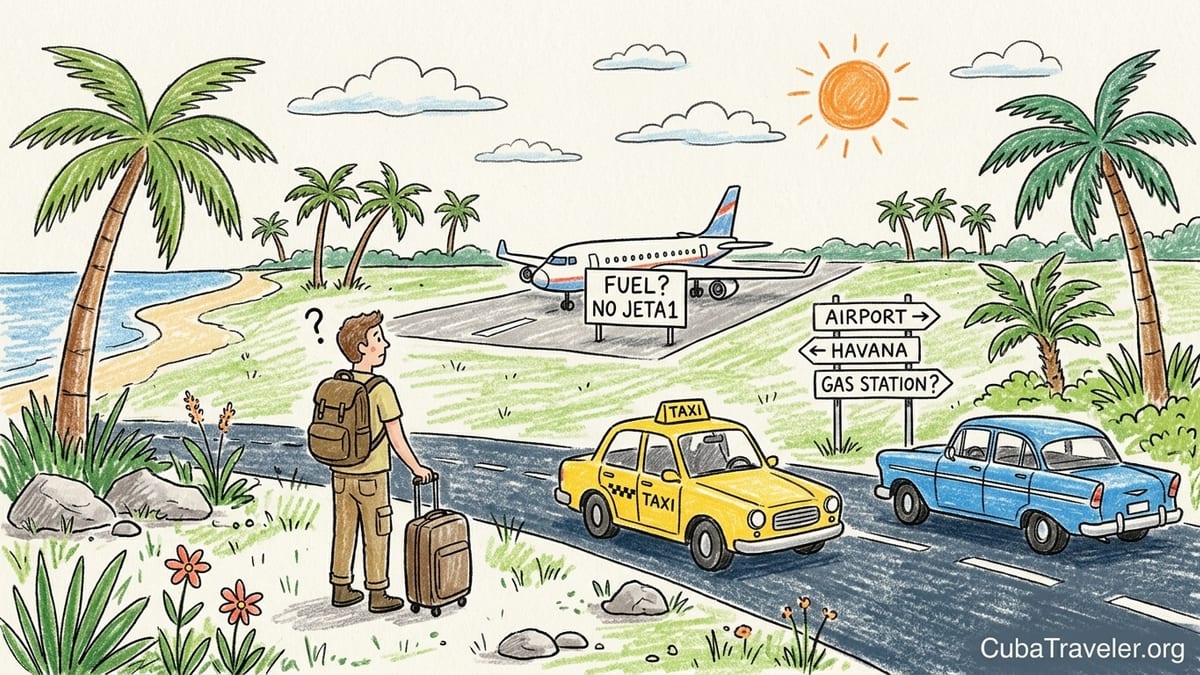
The most immediate transport risk around Cuba in late 2026 is not on the roads but in the air. The island has faced a chronic shortage of jet fuel since early 2026, aggravated by restrictions on oil shipments and a fragile economy. In February 2026 Cuban authorities issued notices to pilots indicating that Jet A1 fuel was unavailable at international airports, triggering a chain reaction of cancellations and diversions by foreign airlines.
Several major carriers have drastically cut or suspended service. Air Canada announced in February 2026 that it was suspending all flights to Cuba because airports could not guarantee fuel for return legs, and in June 2026 the airline confirmed that the planned resumption of Canada–Cuba routes was postponed until further notice. Other Canadian leisure airlines, including Air Transat and WestJet, also halted Cuba operations in 2026 as the fuel shortage deepened.
From Europe, Spanish airline Iberia went further. After initially trying to maintain service via refuelling stops outside Cuba, it formally extended its suspension of Madrid–Havana flights through 30 June 2027, explicitly citing the island’s energy and fuel crisis. Air France temporarily suspended its own Paris–Havana service in 2026. Some European airlines, such as Air Europa and World2Fly, continue to serve Cuba but have reduced frequencies or added intermediate refuelling stops in places like the Dominican Republic, increasing the risk of missed connections and schedule changes.
The practical takeaway is that flight availability to Cuba now changes more quickly than many booking sites can keep up with. A flight that appears on sale today may be pulled from the schedule or heavily rescheduled weeks or even days before departure if local fuel deliveries do not materialise. Any decision to travel should start with the assumption that flight plans might need last minute adjustment.
Why a Flight Displayed Online May Not Actually Operate
Many travellers planning trips to Cuba begin with a search on large third party booking engines. These systems aggregate published airline schedules, often months in advance, and are slow to remove flights when an airline suspends a route or when an airport’s operational situation deteriorates. In the current Cuban context this lag can be critical. A Madrid–Havana or Toronto–Varadero flight may still show as bookable on a comparison site even after the operating airline has quietly decided to suspend or reroute the service.
Several factors explain the gap. First, some airlines keep flights listed while they wait for clarity on fuel deliveries. They may plan to decide closer to departure whether to operate the flight, reroute with a refuelling stop, or cancel altogether. Second, online travel agencies can continue to display legacy inventory if they have not yet processed updated schedule messages from the airline. This means a seat you buy today can be shifted by many hours, moved to a different airport, or cancelled entirely later, often with only a brief email notification.
Because of this, the only reliable way to check whether a Cuba flight is likely to operate is to verify directly with the airline and the airports involved. For example, a traveller from Europe should confirm through the airline’s official channels which specific flight number is currently scheduled, whether the service includes a technical stop, which terminal will be used both outbound and inbound, and how baggage is handled if a refuelling landing takes place. North American visitors need the same level of detail for connections through hubs such as Toronto, Montreal, Panama City or Cancun.
It is also essential to check the status of your return flight, not only the outbound segment. There have been instances where travellers reached Cuba but discovered their return service had been cancelled or rebooked because the airline was no longer confident it could refuel an aircraft for the journey out of Cuba. Before departure, obtain written confirmation of both legs, understand the airline’s reaccommodation rules, and consider schedules that include at least one alternative routing back home if fuel related disruptions worsen.
How to Verify Flights, Connections and Baggage Arrangements
In the current environment, travellers heading to Cuba should treat flight verification as a multi step process that goes beyond what appears in a reservation confirmation. Once you have chosen a routing, call or use live chat with the operating airline to confirm that the flight is not just on sale but actually expected to operate. Ask specifically whether there are any fuel related notices affecting Cuba and whether the carrier is currently routing aircraft via intermediate refuelling stops.
Next, verify terminal and connection details at each airport on your itinerary. In practical terms, this means checking whether your inbound and outbound flights use the same terminal, how much minimum connection time the airline recommends, and whether baggage is checked through to your final destination. For example, some itineraries from Europe to Havana now route via Panama City on a codeshare basis; in such cases, you should know whether you need to collect bags in Panama, recheck them, or simply remain airside during a refuelling stop.
It is also worth confirming how the airline will contact you if the schedule changes close to departure. In 2026 many Cuba bound passengers learned of cancellations through generic emails that were easy to miss. Ensure your mobile number and email are correct in the booking and that you have the airline’s app installed if available. For high risk itineraries, taking screenshots or saving PDFs of both your original schedule and any reissued e tickets can help when negotiating reaccommodation at the airport.
Finally, keep in mind that ground arrangements in Cuba often hinge on specific flight arrival times. Airport transfer companies and private drivers frequently cluster multiple passengers from the same flight into shared vehicles. If your flight is retimed to arrive at midnight instead of late afternoon, prebooked transfers may no longer be able to operate, especially under fuel rationing. When confirming flights, also ask your hotel or transfer provider how they handle major delays and what backup options they recommend if your arrival shifts by many hours.
Arriving in Havana: Airport Pickups, Taxis and Scams
Once on the ground, the question of safety shifts from aircraft reliability to how you leave the airport. Havana’s José Martí International Airport remains the main entry point for most visitors. Officially registered yellow or turquoise state taxis queue outside arrivals, and many hotels or tour operators arrange private transfers in modern minibuses or sedans. Alongside these legitimate services, however, there is a growing informal market of unlicensed drivers, some of whom operate in predatory ways.
Both the UK Foreign, Commonwealth and Development Office and Australia’s Smartraveller service warn of criminals posing as taxi drivers in Cuba, particularly around Havana airport and in Old Havana. These individuals may loiter inside the terminal or just beyond the exit, approaching newly arrived passengers with offers that sound cheaper or quicker than the official taxi line. In some reported cases, travellers were overcharged, driven to isolated ATMs, or had luggage interfered with after accepting such offers.
To reduce this risk, treat the official taxi queue outside the terminal, or a clearly prearranged transfer with a named driver, as the default. Before getting into any vehicle, confirm the driver’s identity, the company they work for if applicable, and the agreed fare to your destination in either Cuban pesos or another agreed currency. If you have booked a hotel transfer, ask the property in advance for the driver’s full name, vehicle description and license plate, then match those details at pickup rather than relying on a handwritten sign that can be easily copied.
Within Havana city, similar caution applies. Old Havana’s squares and the area around Parque Central are full of classic American cars offering city tours or trips to nearby beaches. Some are properly licensed, but others are informal operations with inconsistent safety standards. Official guidance from several governments advises against using unmarked or private classic taxis at night because they may lack modern safety features, such as functioning seatbelts, and because fare disputes can escalate into confrontations. When in doubt, ask your accommodation to call a registered taxi or use a known operator recommended by a reputable hotel.
Understanding Transport Options: Registered Taxis, Private Drivers and Informal Cars
Cuba’s unique vehicle fleet and economic conditions mean that visitors will encounter a patchwork of transport categories that can look similar at first glance. At the safer, more regulated end of the spectrum are state run taxi companies operating modern or semi modern sedans, often painted yellow with a clear taxi logo. These typically charge fares based on zones or loosely calculated distance, and drivers are used to dealing with tourists who pay in a mix of currencies.
A step beyond are prebooked private transfers, usually arranged through hotels, tour agencies or online intermediaries. These tend to use newer vans or minibuses for airport runs between Havana and resort areas such as Varadero or the Cayos. Professional drivers working this segment may have better access to fuel allocations, but even they can be affected by shortages, leading to rescheduled pickups or combined transfers where multiple flights are grouped into a single vehicle journey.
More ambiguous are informal “taxis” and ride offers, often using older Lada sedans or classic American cars in variable mechanical condition. Some operate as shared colectivos on fixed routes between major cities, charging per seat and waiting until the car is full. Others are simply private individuals who see tourists as an opportunity for hard currency. While many such rides proceed without incident, risks include a lack of insurance coverage, minimal safety equipment, and disagreements about price, especially if fuel queues have been long and tempers are short.
When balancing cost and safety, it is generally wise to prioritise known, registered operators for longer or night time journeys, even if an informal driver offers a lower fare. Ask about seatbelts, confirm whether the car has functioning headlights, and check whether the driver is comfortable with the route and timing you propose. In smaller towns the choice may be limited, which makes early planning and flexible schedules even more important.
Rental Cars and the Specific Risks of Driving Yourself
Hiring a rental car in Cuba has traditionally appealed to travellers who want maximum freedom to explore beaches, valleys and colonial towns beyond the main tourist corridors. In the current climate, however, renting and self driving come with a heightened set of risks that go beyond the usual unfamiliarity with local roads. Fuel rationing, a shortage of spare parts and challenging road conditions all converge to make driving, particularly at night, significantly more hazardous than in many other destinations.
Fuel access is the first and most obvious problem. Visitors report that petrol stations often face long queues and intermittent stock. Rental agencies may promise a full tank at pickup, but there is no guarantee you can refill reliably in remote areas or even in Havana on a given day. Some professional drivers know which stations are currently receiving deliveries, yet self drivers rarely have this network. Running low on fuel far from a town, especially after dark, can leave you stranded without an easy way to call for help.
Road conditions add another layer of risk. Outside a few better maintained sections of the Carretera Central and Autopista Nacional, surfaces can be heavily potholed, poorly marked and unlit. Street lighting is patchy even in cities and scarce on rural highways. Pedestrians, cyclists, horse drawn carts and stray animals frequently share the road, often with no reflective gear or lights. At night, this mixture becomes particularly dangerous, especially when combined with occasional vehicles using high beams improperly or driving without lights to save fuel or because of electrical faults.
Mechanical reliability cannot be assumed either. The long running difficulty of importing spare parts means that rental fleets may include older vehicles kept going through improvised repairs. Air conditioning failures, worn tires and unreliable brakes are not rare complaints. While agencies typically provide a breakdown number, the speed of response varies widely, and in some provinces assistance can take many hours to arrive. Travellers should be prepared for the possibility of waiting by the roadside in heat or darkness, with limited mobile reception and uncertain access to water or food.
Legal Exposure After Accidents and Insurance Considerations
Beyond the physical risks of driving in Cuba, visitors need to understand the legal consequences if something goes wrong. Foreigners involved in serious traffic accidents, especially those resulting in injury or death, can face travel restrictions while investigations are conducted. This can mean being prevented from leaving Cuba for extended periods, sometimes weeks or longer, until local authorities complete inquiries and any legal process.
Rental contracts routinely include basic mandatory insurance, but the fine print and the on the ground reality do not always match expectations shaped by other countries. Some travellers have reported significant out of pocket costs for damage even when they believed they had comprehensive cover, and disputes can arise over whether a breakdown was due to driver behaviour or pre existing mechanical weaknesses. In collisions that involve local residents, questions of fault can be complex, and language barriers do not make discussions with police any easier.
Because of this, anyone considering self driving should weigh not only their confidence behind the wheel but also their willingness to navigate a foreign legal system if a serious incident occurs. Choosing daytime driving, keeping speeds conservative, avoiding alcohol entirely when driving, and steering clear of night travel outside major urban areas all reduce risk but do not eliminate it. For some visitors, the legal exposure alone is reason enough to favour professional drivers or buses for intercity movements.
Before signing a rental contract, ask for clear explanations, in writing where possible, of insurance coverage, excess amounts, and procedures after an accident or breakdown. Confirm how to contact the rental company in an emergency, whether roadside assistance is guaranteed, and what documentation you must obtain from police if a collision or theft occurs. Carry your passport, driving licence and rental papers whenever driving, and keep copies stored separately in case of loss.
Comparing Rental Cars, Professional Drivers, Buses and Informal Transport
No single mode of transport in Cuba can currently be described as automatically safe; each comes with specific trade offs that travellers must evaluate based on route, budget, risk tolerance and timing. Rental cars offer freedom and flexibility but concentrate responsibility for fuel, navigation, mechanical issues and legal exposure entirely on the driver. For those set on visiting remote areas at their own pace, hiring a car for short, well planned segments, while avoiding night driving and building in fuel contingency, may be a compromise.
Professional drivers, whether as part of a tour or hired as private transfers, reduce some of that burden. Many have access to better information about fuel availability and road conditions, and they are accustomed to navigating around shortages, sudden timetable changes and police checkpoints. However, travellers remain dependent on the driver’s judgment and vehicle maintenance, and costs for long intercity journeys can be high, especially when paid in hard currency.
Buses, particularly the state run Viazul network that serves foreign visitors, occupy another niche. Viazul historically linked Havana with major destinations such as Viñales, Varadero, Trinidad, Cienfuegos, Holguín and Santiago de Cuba. Recent reports indicate that fuel shortages have led to reduced frequencies and occasional last minute delays when buses could not be refuelled as planned. In early 2026, for example, passengers on a Holguín to Havana service reported long delays attributed to a lack of fuel. Nonetheless, when running, these buses offer a relatively economical and socially shared way to cross the island without the responsibilities of driving.
Informal colectivos and shared cars fill gaps when official options are sold out or disrupted. Travellers often find seats by asking at bus stations or through local contacts. These rides can be faster on some routes but are highly variable in comfort and safety. Vehicles may be overcrowded, lacking seatbelts, or driven aggressively to make up lost time. With fuel scarce, tensions over payments and routes can also arise if drivers feel they are not being adequately compensated for their time in fuel queues.
Timetables, Child Restraints and Basic Safety Equipment
Whatever mode of transport you choose in Cuba, flexibility is vital because timetables are increasingly aspirational rather than firm commitments. Viazul publishes schedules and prices, but travellers should treat them as provisional. It is important to re confirm departures in person at the bus station a day or two before travel and to arrive early in case buses leave ahead of or behind the posted time to accommodate fuel deliveries or vehicle availability.
Parents travelling with children face additional challenges. Child restraints such as rear facing infant seats or booster seats are rarely provided in taxis, rental cars or buses. Most Cuban vehicles are not equipped for international style car seats, and even when they can be installed, the responsibility for bringing and fitting them almost always falls on the family. Travellers who consider child restraints non negotiable should plan to bring their own and verify in advance that their chosen transport method can accommodate them.
Seatbelts are another issue. In many older cars, especially classic taxis and informal colectivos, rear seatbelts may be missing or non functional. Even in some newer cars, belts can be stiff or hidden beneath seat covers. Before committing to a long ride, especially on highways, check that seatbelts work for every occupied seat, and do not be shy about declining a vehicle that cannot provide them. While this might feel awkward, the combination of deteriorated road surfaces and mixed traffic makes restraint systems far more than a formality.
Breakdowns and roadside emergencies are more likely when fleets are stretched and spare parts are scarce. Travellers should carry water, snacks, basic first aid supplies and a charged mobile phone whenever undertaking long journeys. However, reception can be intermittent outside cities, and not all visitors will have local SIM cards. Before setting off, ask drivers what they would do if the vehicle broke down and who they would call. In a rental car, identify the official roadside assistance number and any alternative contacts at your accommodation.
The Takeaway
So, is it safe to drive in Cuba right now? The answer is nuanced. Reaching the island by air is more complicated and uncertain than in previous years because of persistent jet fuel shortages and route suspensions, but many flights are still operating via a patchwork of airlines and refuelling arrangements. Once on the ground, everyday safety depends on the choices you make: which taxis you accept, whether you self drive or rely on professionals, how rigidly you stick to published timetables, and how realistic your expectations are about delays.
Driving yourself can still be an option for experienced, cautious motorists who plan routes conservatively, avoid night travel, understand the legal implications of accidents and can tolerate the possibility of fuel related disruptions. For others, intercity buses and hired drivers may present a more manageable balance of risk and comfort, albeit with their own vulnerabilities to shortages and breakdowns. Across all modes, using registered operators, checking seatbelts, asking detailed questions and maintaining flexible itineraries are the most effective ways to improve your safety margin.
Ultimately, Cuba in 2026 is a destination where transport has become part of the adventure and, at times, the main challenge. Travellers who approach it with up to date information, robust contingency plans and a willingness to adapt on the ground are better placed to stay both safe and sane. Those who need tight schedules, guaranteed comfort or quick emergency exits may wish to postpone their trip until the fuel and transport situation stabilises further.
FAQ
Q1. How badly are flights to Cuba affected by the fuel shortage?
Airlines have responded unevenly. Some, like Iberia, have suspended Havana flights through at least June 30, 2027, while others have reduced frequencies or added refuelling stops. Schedules can change with little notice, so it is essential to confirm both outbound and return flights directly with the operating carrier shortly before travel.
Q2. Does seeing a flight on a booking website mean it will definitely operate?
No. Third party booking engines often display flights based on older schedules, even after airlines have decided to suspend or modify services. For Cuba in particular, a listed flight is only a starting point. Always verify with the airline and monitor your booking in the days before departure to ensure the service is still planned.
Q3. Are official taxis from Havana airport safe to use?
Marked, registered taxis from the official airport rank are generally considered safer than informal offers inside the terminal. However, both UK and Australian authorities report criminals posing as taxi drivers around Havana airport and Old Havana. To reduce risk, use the official queue or a prearranged transfer, confirm the driver’s identity and vehicle details, and agree the fare before departure.
Q4. How risky is it to rent a car and drive myself around Cuba?
Renting a car concentrates multiple risks on you as the driver: irregular fuel availability, poor lighting, deteriorated road surfaces, animals and pedestrians on highways, and the possibility of mechanical problems far from help. Night driving amplifies all of these hazards. Foreigners involved in serious accidents may face travel restrictions while investigations are completed, so self driving should only be considered after careful reflection.
Q5. Are Viazul buses still a reliable way to travel between Cuban cities?
Viazul remains an important option and many travellers still use it, but reliability has deteriorated under fuel shortages. There have been recent reports of significant delays and timetable cuts on some routes when buses could not be refuelled. Treat posted schedules as indicative, reconfirm departures at the station, and be prepared for timetables to change at short notice.
Q6. What should I do about child seats and seatbelts in Cuba?
Child restraints are rarely provided by taxis, rental agencies or buses, and many vehicles lack proper mounting points. If you require a car seat, you will likely need to bring your own and check that your chosen vehicle can accommodate it. Always verify that seatbelts work for every passenger and avoid long journeys in cars without functioning restraints.
Q7. How can I stay safe if my vehicle breaks down or runs out of fuel?
If you are driving a rental car, call the company’s emergency number and follow their instructions. With a taxi or private driver, ask in advance what backup they have if the vehicle fails. Carry water, snacks, essential medicines and a charged phone on long trips, and let your accommodation know your approximate route and expected arrival time so they can raise the alarm if you are seriously delayed.
Q8. What happens if I am involved in a serious road accident in Cuba?
Serious accidents, especially those causing injury or death, can trigger criminal investigations. Foreigners may be subject to exit restrictions and required to remain in Cuba while authorities determine responsibility. This process can be lengthy. Having adequate travel insurance that includes legal support and being meticulous about following traffic laws can help but does not remove the risk.
Q9. Is it safer to hire a driver than to drive myself?
Hiring a professional driver reduces the burden of navigation, dealing with fuel queues and managing breakdowns, and experienced drivers may better understand local hazards. However, safety still depends on the individual driver, the vehicle’s condition and adherence to road rules. It is not automatically safer, but for many visitors it offers a more manageable risk profile than self driving, especially for long intercity trips.
Q10. How should I react if my flight, transfer or bus is suddenly cancelled?
Start by confirming the cancellation directly with the airline or operator and asking about rebooking options. If a flight is cancelled, explore alternative routings through hubs that still have Cuba service. For missing transfers or buses, contact your accommodation for help arranging replacement transport, prioritising registered taxis or reputable drivers. Keep cash reserves for unexpected transport costs and allow extra days in your itinerary in case you need to wait for alternative connections.