


Travel to Cuba in late 2026 is no longer a carefree Caribbean escape but a complex logistical exercise. Severe fuel shortages, frequent power cuts, hotel closures, and reduced flight options have turned the classic Havana–Viñales–Cienfuegos–Trinidad–Varadero circuit into a fragile chain where one broken link can leave visitors stranded. This guide is written for people who genuinely need to be in Cuba or who are already there and must move around as safely and conservatively as possible, not for those planning a casual beach holiday.
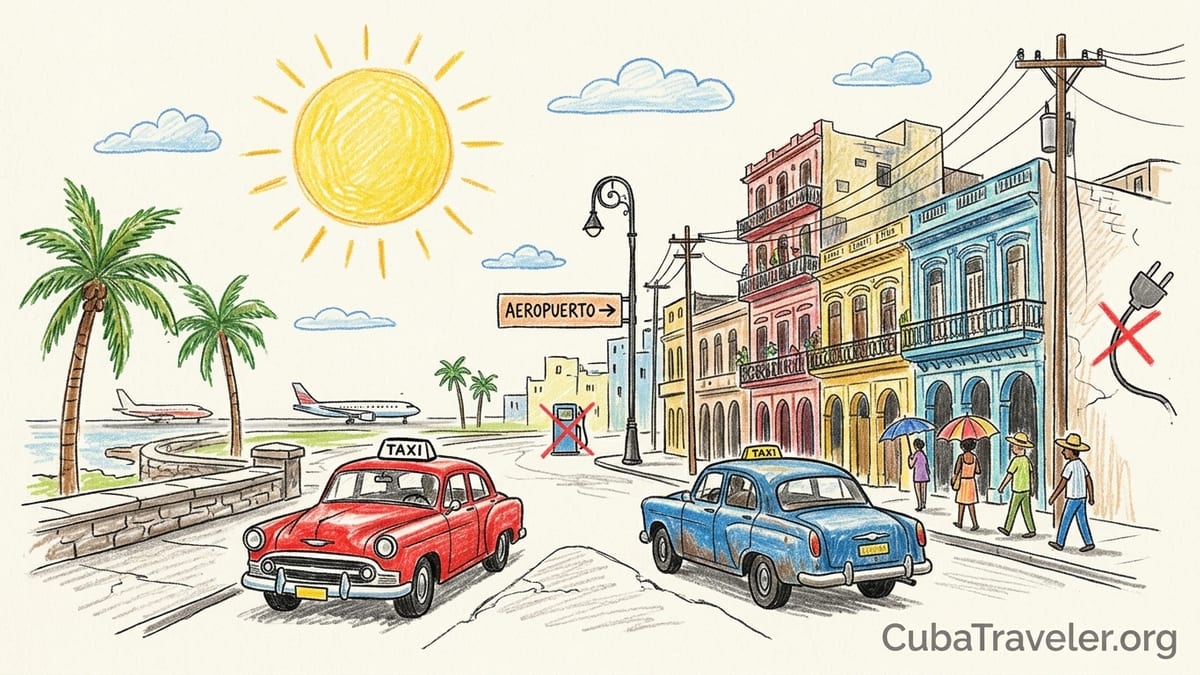
Why Cuba Requires a Safety‑First Itinerary in 2026
Several governments now formally advise against non‑essential travel to Cuba or urge a high degree of caution, citing nationwide fuel shortages, frequent power outages, and strained public services as of late 2026. Recent advisories from countries like the United States, the United Kingdom, and New Zealand highlight reduced availability of fuel, food, and medicines, as well as disruptions to transportation across the island. At the same time, humanitarian assessments describe a deepening economic crisis where even basic logistics have become unpredictable. For travelers, this means that every intercity transfer, every hotel booking, and every return flight must be treated as a potential point of failure.
Fuel scarcity sits at the heart of the problem. Cuba relies heavily on imported oil, and shipments have fallen sharply in the past two years due to a combination of sanctions, changing suppliers, and what some officials openly describe as an "oil blockade." As of October 2026, Cuba’s own transport minister has acknowledged that public transport has plunged to an all‑time low, with buses and domestic flights regularly canceled or drastically reduced. Private taxis and long‑distance colectivos, which tourists often depend on to reach places like Viñales or Trinidad, are also constrained, since drivers may queue hours or days for gasoline they then must ration carefully.
The electricity grid is under similar strain. Large parts of the country, especially outside Havana and major resort enclaves, endure extended blackouts. Human‑rights and policy reports covering 2024 to 2026 describe multi‑hour daily outages in many provinces, with knock‑on effects on water pumping, internet connectivity, refrigeration, and public lighting. Some international hotels in Havana and Varadero operate backup generators, but surrounding neighborhoods can remain in the dark. For independent travelers staying in casas particulares or smaller hotels, a power cut can mean no air‑conditioning, unreliable Wi‑Fi, and even doors without working electronic locks.
Tourism infrastructure has not been spared. Visitor numbers in 2024 and 2025 fell significantly compared to pre‑pandemic peaks, and 2026 brought further shocks as jet fuel shortages forced Canadian and Russian airlines to suspend most flights. Media reports from early 2026 describe resorts closing entire wings, reducing buffet offerings, and cutting services when supplies ran low. While some hotels in Havana and Varadero remain operational, many operators update schedules only at short notice. In this environment, an itinerary that once promised variety and color now represents overlapping layers of risk, especially if it depends on multiple long transfers and rural stops.
Why the Classic Havana–Viñales–Cienfuegos–Trinidad–Varadero Loop Is Now Fragile
For years, guidebooks celebrated a classic week‑to‑ten‑day loop: start in Havana, enjoy tobacco country in Viñales, dip south to colonial Cienfuegos and Trinidad, then finish at Varadero’s beaches before flying out. In the current climate, that multi‑stop chain multiplies your exposure to transport failures, power cuts, hotel closures, and flight changes. Each extra destination requires at least one more intercity transfer, often five to eight hours by road. With public transport at historic lows and private drivers carefully rationing fuel, those moves are no longer routine.
Consider the transfer from Havana to Viñales. Before the fuel crisis, tourists might either take a Viazul long‑distance bus, book a shared taxi through a casa particular, or buy a door‑to‑door ride from a private driver for the roughly three‑hour trip. As of late 2026, travelers report that bus schedules are irregular or canceled at very short notice, while private drivers may decline bookings if they cannot secure gasoline. If you do reach Viñales, you then rely on more transport to ride horses into the valley, visit tobacco farms, and ultimately return to Havana or move onward to Cienfuegos, all within the same fragile supply system.
The southern leg to Cienfuegos and Trinidad introduces even longer stretches of road and still fewer fallback options. The highway between Havana and Cienfuegos can take four to five hours in good conditions, and Trinidad lies another 90 minutes beyond. Reports of provincial blackouts lasting much of the day mean that small guesthouses might lose refrigeration and water pressure, while bus terminals may operate minimally lit and with limited information screens. If your prebooked taxi cannot obtain fuel, you may find that alternative rides are either prohibitively expensive in foreign currency or simply nonexistent on the day you need to move.
Varadero, by contrast, still functions somewhat more reliably because it is a flagship resort area and a priority for scarce fuel and electricity. Even so, there have been confirmed instances of resorts operating on generators, scaling back services, or closing temporarily. Getting from Trinidad or Cienfuegos up to Varadero still requires another long transfer, typically via the central highway or through Havana. In practice, every additional stop adds dependencies: a vehicle with fuel, a viable road, an open hotel with power and staff, and, crucially, a confirmed way back to the international airport when your outbound flight may already be subject to late schedule changes.
A Compact Three‑Day Havana Safety Plan
If your reason to visit Cuba is tightly bounded, such as meeting family, handling work obligations, or dealing with legal or consular matters, a short, geographically compact stay in Havana is the lowest‑risk option. In three days, you can complete key tasks and see a slice of the city while keeping your exposure to transport and infrastructure shocks as small as possible. Base yourself in central Havana, ideally in Old Havana (Habana Vieja), Centro Habana near Parque Central, or Vedado close to the Malecón and major hotels, so that most daytime movement can be on foot or via short taxi rides.
Daytime hours are your safest and most efficient window. In Old Havana, a practical cluster would combine the Plaza Vieja area, the Cathedral district, and the Castillo de la Real Fuerza waterfront into a single walking loop. If you need to visit banks, travel agencies, or ETECSA offices for SIM cards and top‑ups, many are concentrated around Obispo Street, Parque Central, and Vedado’s main avenues. By mapping errands into two or three compact neighborhoods per day, you minimize the need to hail taxis in areas affected by fuel scarcity, where cars may be scarce and fares quoted in hard currency only.
Wherever possible, plan to be back at your accommodation before dark. Street lighting can be patchy even during normal operations, and in a blackout, sidewalks become uneven obstacles. Evening meals are best taken near your hotel or casa particular. For example, a traveler staying near the Hotel Nacional might rely on the hotel’s own restaurants and a handful of nearby paladares that have generator power. This focus on short‑range movement will not deliver the most adventurous experience of Havana, but it significantly reduces the risk of being caught across town if a sudden power cut disrupts traffic lights, card payments, or mobile coverage.
Within three days, you may be tempted to squeeze in a classic convertible ride along the Malecón or a visit to the Plaza de la Revolución. In 2026, treat these as bonuses, not anchors of your plan. Confirm the ride only if the driver can show up at your door and does not require you to travel across the city to a meeting point. Be prepared to cancel if the city is experiencing extended outages or protests related to fuel and power. The priority is to save your flexibility and energy for essentials: embassy appointments, airline rebooking if necessary, and securing safe accommodation.
A Five‑Day Single‑Base Plan: Havana With Short Outings
Travelers who must spend around five days in Cuba but want to keep risk contained should base themselves entirely in Havana and add only short, optional outings that can be canceled at no cost. This framework suits those handling family matters, business tasks, or research, but who also hope to see a bit more of the country without committing to long transfers or multiple accommodations.
Under this plan, days one and two mirror the compact Havana strategy: daytime walking circuits in Old Havana and Central Havana, combined with errands and meetings. Day three could include a cautious half‑day excursion, such as a taxi ride to the beachfront area of Playas del Este, around 30 to 40 minutes east of central Havana in light traffic. Here, your driver could wait or agree on a firm pickup time, but only once both legs of the journey are confirmed and fuel is not in doubt. If the driver expresses hesitation about gasoline or suggests last‑minute changes, cancel the beach trip and reallocate the day to activities within the city.
Day four might be reserved for Vedado and the western side of Havana, including the Malecón, the University district, and key hotels that tend to keep generators. This is a good day to test backup options: identify at least one hotel lobby where you can work or charge devices during a blackout, and note which cafes or co‑working spaces remain open during cuts. Anecdotal reports from visitors over the past two years highlight that some international‑brand hotels in Vedado can maintain stable power and water even when surrounding blocks are dark, though services like Wi‑Fi may slow due to network congestion.
Day five should be treated as a buffer before departure, even if your flight is in the evening or the following morning. Use this time for final confirmations: recheck your airline status via app or hotline, verify with your host or hotel that you have a reliable ride to the airport, and print or write down key details in case mobile data fails. Avoid booking any outing that would take you far from Havana or require highway travel, even to seemingly close destinations. The goal is to end the five‑day period still in the capital, with a clear and conservative path to the international airport.
A Seven‑Day, Two‑Base Plan for When Transfers Are Truly Secure
Some travelers will have essential reasons to stay a full week and may consider adding a second base, typically either Varadero or, less commonly now, a nearby coastal area reachable within a few hours. In 2026, such a plan should proceed only if you can secure and reconfirm all transfers in writing and in person, including your return leg to Havana. Verbal promises are not enough in a context where fuel can disappear overnight from service stations and domestic flights may be adjusted with little notice.
The lowest‑risk two‑base structure is Havana plus Varadero, not Havana plus Viñales or Trinidad. Varadero is roughly two to three hours by road from Havana under normal conditions, and many resorts still arrange private transfers or shared shuttles for guests. When functioning well, a traveler could spend days one to three in Havana, days four and five in Varadero for rest and work in a more controlled environment, then return to Havana on day six, keeping day seven purely as an exit buffer. The crucial condition is that both the Havana–Varadero and Varadero–Havana legs are confirmed by a reputable hotel or driver who has a track record of securing fuel and who is reachable on at least two different communication channels.
Within Varadero, distinguish strictly between hotel‑based activities and excursions. Activities that keep you on or near resort property, such as using the beach, pools, or nearby shops, are relatively contained because many large resorts maintain generators and fuel allocations. By contrast, day trips from Varadero to Havana or Matanzas should be treated as optional extras only if you can confirm both outbound and return transport on the same day and if your overall itinerary does not depend on their success. For example, a visitor staying at a large beachfront resort might accept a bus‑based Havana day tour only if the bus company can show recent, reliable operations and if they are not flying out within the following 48 hours.
Even on a seven‑day trip, the final two days before your international flight should always be spent in Havana, not in Varadero or any provincial town. This is because roadblocks, fuel shortages, or last‑minute rationing can suddenly limit long‑distance travel. A traveler who plans to leave Varadero the same day as a long‑haul flight risks missing it if traffic stalls, if their driver cannot fuel up, or if a mechanical problem occurs when replacement vehicles are unavailable. By returning to Havana at least 48 hours before departure, you preserve time to resolve problems such as rescheduling flights, finding alternate accommodation after a hotel closure, or dealing with consular issues.
When and Why to Drop Viñales or Trinidad
Viñales and Trinidad remain beautiful and culturally rich. In normal circumstances, both are highlights of any Cuban journey, and tourism there is vital to local livelihoods. In 2026, however, trips to these towns should be approached with extreme caution and dropped immediately if transport and fuel cannot be reliably verified. Reaching Viñales from Havana involves at least three hours by car each way through rural stretches where breakdown assistance is limited and gas stations may be dry. Local activities in Viñales, like visits to tobacco farms or cave tours, then require further short rides, usually in classic taxis whose owners cannot guarantee fuel more than a day or two in advance.
Trinidad poses similar risks but on a larger scale. It is a full day’s overland journey from Havana, with few high‑quality service stops in between. Once you arrive, you depend on local guesthouses and small hotels that may lack generators. Extended blackouts in the region mean some properties might only offer running water for a few hours at a time, and refrigeration of food can be inconsistent. If a prebooked return transfer falls through because the driver could not refuel, your options may be limited to finding a seat in an already full colectivo or waiting days for the next viable bus.
The decision rule should be straightforward: if you cannot see written confirmation of round‑trip transport, backed up by recent evidence that the provider is operating under current fuel conditions, you should not attempt Viñales or Trinidad on a tight schedule. This is particularly true in the last four to five days before an international flight. Even if a visit appears possible on paper, any delay caused by blocked roads, protests over power cuts, or a sudden fuel shortage could leave you stranded far from Havana’s airport when you most need predictability.
For travelers already in Viñales or Trinidad, the priority is to secure a confirmed way out as early as possible. Check with multiple drivers, ask your host which transport options actually ran in the past week, and, if necessary, be willing to cut short your stay to return to Havana or Varadero when a seat is available. It is better to lose a prepaid night in a guesthouse than to miss an international flight that may be very difficult or expensive to rebook from Cuba.
Conservative Planning for the Final 48 Hours Before Departure
In the present Cuban context, the last two days before your international flight should be the most conservative part of your itinerary. These 48 hours are when cascading failures matter most: a canceled transfer, a sudden blackout at your hotel, or a last‑minute airline schedule change can undo all your previous careful planning. The safest move is to be physically in Havana, with your luggage and essential documents, at least two nights before your scheduled departure from José Martí International Airport.
Once in Havana, select accommodation with the highest likelihood of continuous operation. That usually means a reputable hotel in Vedado or near Parque Central that has its own generator and water reserves, or a well‑reviewed casa particular whose owner can describe in detail how they handle power cuts. When you check in, ask concrete questions: How did the property manage during the last major blackout? Do they have a backup water tank? Where can guests go nearby in the event of an extended outage? The answers will give you a realistic sense of how resilient your final days will be.
Transport to the airport should be reconfirmed at least twice: once 24 hours before departure and again on the morning of your flight. In recent seasons, travelers have reported that airport shuttles and prebooked taxis occasionally fail to appear because drivers ran out of fuel or diverted to more lucrative fares. To mitigate this, consider booking through your hotel, which may have priority access to licensed taxis. If ride‑hailing or informal apps operate in your area, do not rely on them as your only option, since mobile data may weaken or go offline during blackouts or protests.
Finally, expect potential flight changes. International coverage in 2026 has noted periods when airlines adjusted Cuba schedules due to limited jet fuel, lower demand, or operational constraints. Monitor your flight through the airline app or text alerts while you still have solid connectivity, and take screenshots of boarding passes and reservation codes. If your flight time shifts significantly, respond by adding still more caution, not by suddenly planning a last‑minute side trip. This is the moment to stay close to your hotel, keep bags packed, and be ready to reach the airport earlier than usual if traffic or security lines are affected by power or staffing issues.
Contingency Planning: Closures, Blackouts, Fuel Shortages and Flight Changes
In Cuba’s current environment, every itinerary should have built‑in contingency layers. Hotel closures, for example, may arise with little warning if power problems worsen, if staff cannot reach the property due to transport failures, or if shortages of food and water make operations unviable. To prepare, always have at least one backup accommodation identified in the same neighborhood, ideally a property that you have already contacted by phone or messaging app. Carry the physical address and phone details in writing. If you arrive to find your booking unavailable, you will be able to show a taxi driver or walk directly to the alternative without relying on a live internet search.
Blackouts are nearly unavoidable in many regions, even in parts of Havana. A practical example from recent traveler reports is that some visitors have gone through eight‑hour daily outages during which only hotels and a few businesses kept lights on thanks to generators. To cope, travel with a charged power bank, a small flashlight, and any battery‑powered devices you rely on, such as hearing‑aid chargers or medical equipment. Before dusk, ensure all devices are at maximum charge, fill water bottles while pumps are working, and identify a nearby hotel lobby or public space that tends to remain lit during cuts. During a blackout, elevators may be disabled, card terminals can go offline, and some ATMs may not function.
Fuel shortages will shape nearly every movement you make. Assume that last‑minute long‑distance rides may not exist, regardless of price. When you do book a transfer, ask specific questions: when did the driver last make this route, where do they plan to refuel, and what happens if their vehicle breaks down? In some recent anecdotal cases, foreign visitors who booked long trips across multiple provinces have ended up paying additional cash on the road to secure replacement vehicles after breakdowns, because local drivers had not anticipated how hard fuel would be to find. Keeping your distances short and your plans flexible lowers the probability that you will have to improvise in this way.
Flight changes and communication failures often go hand in hand. A sudden shift in airline schedules may be communicated via email or app notifications that you cannot access if mobile data is down. For this reason, check for updates whenever you find a strong Wi‑Fi connection in a hotel or business center, and screenshot every key screen. Write down your airline’s Cuban and international customer‑service phone numbers and your booking reference. If you lose connectivity at the same time that a flight is delayed or rerouted, these paper backups can be shown to airport staff, who may have internal systems running even when consumer internet is offline.
What to Save Offline Before and During Your Trip
Given unstable connectivity, preparing offline information is a core safety strategy, not a convenience. Before departure, create digital copies of your passport ID page, visa or tourist card, return tickets, and any medical documents such as prescriptions or vaccination records. Save them as files inside your phone, ideally in a simple folder, and also on a secure cloud service you can reach from any device. Then export the most critical items as screenshots so they remain accessible even if specific apps will not open without data.
Print, or write on paper, the full details of your airline booking, including reservation numbers, flight numbers, and scheduled times. If you are flying with a carrier that bundles Cuban medical insurance into the ticket, make a note of the insurer name and emergency contact number, which may appear in small print on your e‑ticket. Having these on paper allows you to check in or claim assistance even if the airline desk is working from offline lists during an outage. Include the physical addresses, phone numbers, and, when available, WhatsApp contacts for each accommodation you have booked, in Spanish and in your own language.
Emergency contacts deserve special attention. Compile the phone numbers and office addresses of your country’s embassy or consulate in Havana, any on‑call local contacts such as family or colleagues, and the 24‑hour number for your travel insurer. Because dialing formats can be confusing during stress, note the exact sequence of digits needed when calling from a Cuban mobile or landline. Store this both in your phone and on paper tucked inside your passport cover or money belt. If you lose your device or it runs out of battery, you will still be able to reach help from a borrowed phone.
Offline maps and essential Spanish phrases are equally valuable. Download the Havana and Varadero areas in a maps app that works without data, and mark your accommodation, the airport, major hospitals, and embassy locations. As for language, keep a short list of phrases related to health, transport, and logistics, such as "Necesito un taxi al aeropuerto," "¿Hay gasolina suficiente para regresar hoy?", "¿Tienen generador para la electricidad?" and "¿Dónde está el hospital más cercano?" Being able to ask these questions clearly can save time and reduce misunderstandings when power or internet outages have already made the situation tense for everyone involved.
Flexible Sample Schedule and a Post‑Recovery Route for the Future
The following outline offers a flexible one‑week schedule that prioritizes safety under current 2026 conditions. It assumes that your travel is essential and that you are willing to sacrifice variety for resilience. Adjustments should always favor shortening distances and simplifying transfers, not adding new locations.
Days 1 to 3 are spent entirely in Havana, centered on Old Havana and Vedado. Day 1 is dedicated to arrival, cash access, SIM cards or eSIM activation if available, and confirming all existing bookings. Day 2 focuses on core obligations and essential sightseeing within walking distance, while Day 3 allows for further errands or a conservative local outing, such as visiting the Malecón or a museum, always with a clear route back before dark. Accommodation remains the same throughout to avoid mid‑week moves.
Days 4 and 5 are optional. If, and only if, you have secured written confirmation of round‑trip transport and verified that your return flight remains unchanged, you might transfer to a hotel in Varadero for rest and limited beach time. On those days, treat any longer excursion as expendable. If conditions deteriorate, immediately return to Havana at the first safe opportunity. If transport is unreliable, simply stay in Havana and continue with low‑impact activities like neighborhood walks, visiting cultural centers during daylight, and preparing contingency documents.
Days 6 and 7 are always back in Havana, serving as your protective buffer. Use them to reconfirm airport transfers, monitor flight information, and resolve any outstanding logistics. Avoid new commitments that require leaving the city, including last‑minute trips to Viñales, Cienfuegos, or Trinidad. Should you learn of a flight cancellation or major delay, this buffer gives you time to coordinate with your airline, embassy, or insurer while you still have accommodation and access to urban infrastructure.
Looking ahead to a potential post‑recovery era, many travelers will understandably dream of a more expansive two‑week route. The following example is provided for future planning only and is unsuitable for assuming current 2026 conditions. A post‑recovery itinerary might start with three nights in Havana, followed by three nights in Viñales for hiking and tobacco farm visits, two nights in Cienfuegos to explore its seafront and architecture, three nights in Trinidad for colonial streets and nearby beaches, and three nights in Varadero for rest before departure. Such a route would only be reasonable once fuel supplies, public transport frequencies, hotel reliability, and power stability have clearly improved, airlines have restored predictable schedules, and official travel advisories have eased.
The Takeaway
Visiting Cuba in late 2026 demands a mindset closer to fieldwork or essential missions than to conventional leisure travel. The intersecting crises of fuel scarcity, fragile electricity, and stressed public services mean that every extra city and each added transfer increases your exposure to problems that local residents already struggle with daily. For those who must be in the country, a compact, conservative itinerary built around Havana, with only carefully verified side trips, offers the best balance between fulfilling obligations and staying safe.
The key is to simplify, verify, and prepare. Simplify by reducing the number of bases and long road journeys, skipping Viñales or Trinidad unless you have rock‑solid transport in and out. Verify every transfer and booking multiple times, especially those involving Varadero and your final trip to the airport. Prepare by saving documents and maps offline, learning essential Spanish phrases, and planning for blackouts, hotel disruptions, and communication failures. With that framework in place, you can navigate Cuba’s current challenges with more confidence and a clearer sense of your own limits.
FAQ
Q1. Is it safe to travel to Cuba in late 2026?
Travel advisories from several governments currently urge against non‑essential travel or recommend a high degree of caution due to fuel shortages, power cuts, and limited services. If your trip is not essential, postponing until conditions stabilize is the safest choice.
Q2. Should I still plan to visit Viñales or Trinidad?
Only if you can secure confirmed round‑trip transport and have generous time buffers before your international flight. Because of fuel and power instability, many travelers with tight schedules are better off skipping these towns in favor of staying in Havana and, if viable, Varadero.
Q3. How many different bases are realistic for a one‑week trip?
Under current conditions, one or at most two bases are advisable. A week divided between Havana and, if transfers are confirmed, Varadero is considerably safer than attempting a multi‑stop loop that includes Viñales, Cienfuegos, and Trinidad.
Q4. Can I rely on public buses like Viazul for long‑distance travel?
Bus services have been affected by fuel shortages and may run reduced or inconsistent schedules. You should not rely on a single bus connection for a time‑critical move such as returning to Havana for your flight without at least one backup plan.
Q5. Do major hotels really have fewer blackout problems?
Many large hotels in Havana and Varadero operate generators that keep essential services running during blackouts, but this is not guaranteed. Always ask directly how the property handles power cuts, and remember that surrounding streets and small businesses may still lose electricity.
Q6. How should I handle money, given the crisis?
You should arrive with a mix of widely accepted hard currencies, such as euros or Canadian dollars, and use them for key expenses. ATMs and card terminals can fail during power outages or network disruptions, so do not depend solely on plastic for essential payments like accommodation or airport transfers.
Q7. What if my prebooked airport transfer does not show up?
Build in extra time and have at least two alternative options: a second taxi contact arranged through your accommodation and, if available, a hotel shuttle or driver service. If your first ride fails to appear, act quickly rather than waiting until it is too late to improvise.
Q8. Which documents are most important to save offline?
Offline copies of your passport, visa or tourist card, airline reservations, travel insurance details, accommodation addresses, and embassy contacts are critical. Store them as both digital files and on paper in case your phone is lost or uncharged.
Q9. Are day trips from Varadero to Havana or Matanzas advisable?
They can be considered only if you confirm both outbound and return transport on the same day and you are not flying soon afterward. If there is any doubt about fuel or schedules, it is safer to stay within Varadero until you move back to Havana for your departure.
Q10. How conservative should I be with timing before my international flight?
Plan to be back in Havana at least 48 hours before departure and reconfirm your airport transfer at least twice. Avoid being in remote or provincial areas in the last two days, since transport disruptions could easily cause you to miss your flight with limited options for rebooking.