


As of October 28, 2026, Cuba is open to foreign visitors, but it is not a normal Caribbean holiday destination. Canada now advises avoiding non-essential travel to Cuba, the United Kingdom advises against all but essential travel, and Australia tells its citizens to reconsider the need to travel. These are advisory levels rather than blanket bans, yet they reflect a severe infrastructure and humanitarian crisis: prolonged power cuts, fuel and drinking-water shortages, limited medicines, disrupted transport and fragile emergency healthcare. Tourists still fly into Havana and walk the seafront in Varadero, but anyone considering a trip in 2026 needs to understand that the main risk is not only crime. It is whether the island’s basic systems work well enough to keep a holiday comfortable and, in some cases, safe.
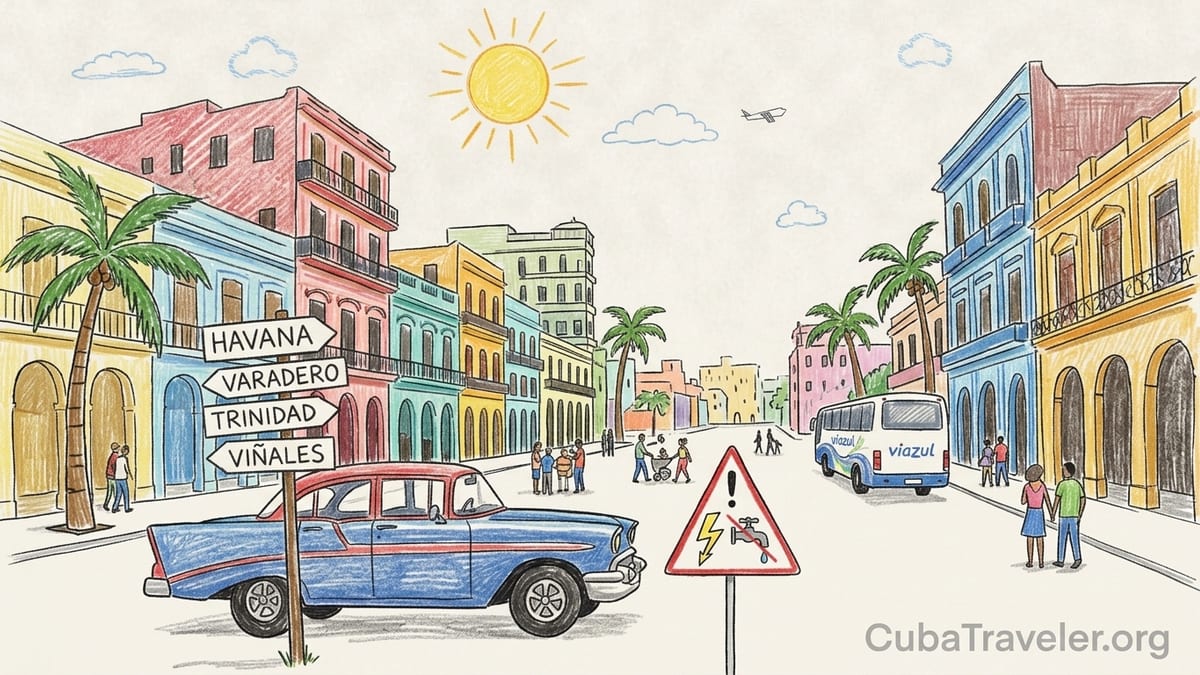
Current Safety Picture: Warnings Without a Total Travel Ban
Several governments have tightened their Cuba advice during 2026. Global Affairs Canada raised its advisory to a level where it now urges Canadians to avoid non-essential travel, citing severe shortages of fuel, power, food, water and medicine, and warning that even embassy operations in Havana are constrained. The United Kingdom’s Foreign, Commonwealth and Development Office advises against all but essential travel and flags protests, power outages and shortages as key concerns. Australia’s Smartraveller places Cuba at “reconsider your need to travel” due to serious fuel shortages affecting essential services. These are strong warnings, but they are not legal bans on tourism, and flights and package holidays are still being marketed in some countries.
In practice, this means travelers must make their own judgment about risk, comfort and flexibility. A couple from Montreal booked into an all inclusive resort in Varadero may still find a mostly functioning holiday bubble, while independent travelers moving between Havana, Trinidad and Santiago de Cuba can encounter long queues for fuel, cancelled intercity buses, reduced domestic flights and supermarket shelves with very limited stock. No advisory can predict exactly how your week will go, but they are clear that disruptions and shortages should be expected rather than treated as rare exceptions.
It is also important to separate political and economic factors from day to day personal safety. Part of Cuba’s crisis stems from tighter US sanctions on fuel shipments, an aging electricity grid and a deep foreign currency shortage. For a visitor, the key question is less who is to blame and more what conditions are like on the ground: how often the power fails, what happens to tap water, how hard it is to find transport, and what emergency support exists if you fall seriously ill or need to leave the country ahead of schedule.
Travel insurers and tour operators are paying close attention to these developments. Some Canadian carriers suspended or drastically reduced flights earlier in the year when jet fuel for international airports became scarce, while several European and Latin American airlines cut frequencies into Havana when blackouts disrupted airport operations. Travelers booking independently should factor in the possibility of last minute schedule changes, longer layovers and the need to rebook connections at their own expense.
The Infrastructure Crisis: Power, Water, Fuel and Healthcare
Cuba’s infrastructure problems in 2026 are not minor inconveniences. Extended daily blackouts, sometimes approaching 18 to 20 hours in certain provinces, have been reported as aging power plants fail and fuel imports dry up. In Havana, where the authorities traditionally tried to shield the capital from the worst outages, power cuts are now common. In smaller cities and rural areas, some neighborhoods can experience full days without electricity. When the grid fails, street lighting disappears, air conditioning and fans cut out in hotels and private guesthouses, and refrigeration for food and some medicines stops working.
Fuel is another critical pressure point. Shortages of gasoline and diesel have led to long queues of cars and buses at filling stations, with lines sometimes stretching for blocks. Intercity bus routes operated by Viazul have seen reduced services and more frequent cancellations, while shared taxis that once linked Havana to Viñales or Trinidad in a few hours may be unavailable or charge far higher prices when fuel appears. Domestic flights within Cuba have become rarer, with some aircraft grounded due to a lack of spare parts and aviation fuel. Travelers who expect to move freely across the island using a mix of domestic transport options can find their plans slowed or halted by simple lack of fuel.
Water and healthcare are equally affected. Blackouts disrupt pumping and treatment, so tap water may not flow at all for parts of the day, or may lose proper chlorination. Hotels and better equipped casa particular guesthouses sometimes have rooftop tanks that bridge short outages, but these tanks do not purify water; they only store it. At the same time, hospitals and clinics are facing severe shortages of basic medicines and supplies. Foreign embassies and the United States travel advisory highlight a lack of everything from antibiotics and painkillers to syringes and bandages. A visitor who breaks an ankle on a dark staircase may find the local hospital short of imaging equipment or unable to provide certain drugs, and an evacuation to a third country could be required for complex treatment.
These conditions can directly influence personal safety. When elevators stop in mid ride in Havana apartment buildings during an outage, visitors may need to climb many floors by darkened stairwells. Food stored without consistent refrigeration can spoil silently, increasing the risk of foodborne illness in smaller restaurants and informal street food stands. Air conditioning systems shutting down in high humidity may worsen the health impact of mosquito bites, because standing water accumulates more easily in containers used to store water during outages, helping vectors like Aedes aegypti thrive and raising the potential for dengue and other mosquito-borne diseases.
Crime and Personal Security: How Safe Do Tourists Feel?
Official UK guidance notes that recorded crime levels in Cuba remain lower overall than in the UK. Many travelers still describe Cuba as feeling relatively safe for walking around, especially in busy areas of Old Havana or along the Malecón seafront, compared with some other Latin American destinations. However, the economic crisis and scarcity have contributed to a rise in opportunistic crimes that specifically target tourists, who are perceived as carrying foreign currency and valuable electronics.
Common incidents include bag snatching in crowded streets, pickpocketing on packed buses or during popular events, and thefts from rental cars or unlocked balconies in guesthouses. There are also reports of fake taxi drivers in unofficial vehicles overcharging visitors or, in rarer cases, driving them to isolated ATMs and pressuring them to withdraw money. Nighttime muggings around poorly lit side streets can happen, especially when visitors walk alone after midnight with cameras or smartphones in plain sight. While shootings are rare, and Cuba does not have the same level of armed street crime seen in some neighboring countries, the combination of economic hardship and reduced police resources can increase risks in specific situations.
Robberies from accommodation are another concern. A guest might leave a bag on a terrace or near an open window during a blackout, only to find it missing later. In some cases, thieves take advantage of confusion during sudden power cuts in bars or music venues to grab phones from tables. Travelers who keep valuables in a hotel safe, lock doors and windows, and avoid displaying large amounts of cash visibly reduce their exposure, but they cannot remove it entirely, particularly in areas where street lighting is sporadic and blackouts plunge whole blocks into darkness.
Despite these issues, many visitors still explore Havana’s historic center by day, ride in classic cars along the seafront, and visit live music venues in neighborhoods such as Vedado. The key is not to assume that the traditional narrative of “very low crime Cuba” still fully applies. It is more accurate in 2026 to think of the island as a place where serious violent crime against tourists remains uncommon, but petty and opportunistic theft is more frequent and can be aggravated by blackouts and shortages.
Regional Differences: Havana, Varadero, Trinidad, Viñales, Santiago and Remote Coasts
Safety and comfort in Cuba vary significantly by region. Havana, as the capital, concentrates the most tourists and has more hotels with generators, better internet access in certain districts and more visible police presence. During an evening stroll around Old Havana or the Prado, travelers will see both foreign visitors and local families out, even when street lighting is weak. However, Havana also has some of the starkest contrasts: gentrified streets a few blocks away from neighborhoods where blackouts are longer, water supply is patchier and economic pressure is intense. Venturing far from central areas at night requires more caution.
Varadero, Cuba’s main all inclusive resort strip, generally offers the most controlled environment for foreign visitors. Large hotels backed by foreign chains often have their own generators, reserves of bottled water and food supply contracts that buffer many of the shortages visible elsewhere. Canadian and European families continue to book week-long packages here, attracted by wide beaches and the promise of a self contained stay. Yet even Varadero is not immune to the broader crisis. Prolonged blackouts can still interrupt air conditioning and elevator service, and fuel shortages have led to cancellations of excursions to Havana or the countryside. Travelers relying on local taxis for side trips may find prices higher and availability lower when fuel is scarce.
Smaller heritage towns such as Trinidad and Viñales are more exposed to the infrastructure crunch. In Trinidad, power cuts can be frequent and long, leaving the colonial streets lit only by a few generators in central squares and the glow of candles in guesthouses. Viñales, a popular base for tobacco farm visits and hiking in the mogote hills, may see fuel shortages that limit the number of taxis and tour vehicles available for day trips. When blackouts hit these smaller towns, there is often less backup capacity in clinics, pharmacies and hotels, which can make an injury or dehydration episode harder to manage.
Santiago de Cuba and the remote eastern and southern coasts add another dimension: distance from Havana’s limited resources and proximity to hurricane tracks in late summer and autumn. Santiago has a vibrant cultural life and important historic sites, but reports of longer blackouts, water disruptions and greater scarcity of consumer goods are common. Coastal villages used mainly by Cuban families and a small number of foreign kitesurfers or divers might go hours or days without steady power, and mobile coverage can be patchy. In these areas, if a traveler’s rental scooter breaks down on an unlit road during a fuel shortage or a tropical storm disrupts the grid, assistance can be slow to arrive.
Blackouts, Roads, Food Safety, Hurricanes and Health Risks
When the lights go out in Cuba, everyday situations can become safety issues. In Havana, blackouts can leave whole blocks of the Malecón and Centro Habana in darkness, meaning open manholes, broken pavements and puddles are harder to see. Visitors walking back from a restaurant to a guesthouse may misjudge a step off a high curb or trip in potholes. In older colonial towns, stairs without handrails and unmarked drops are common in historic buildings, and sudden darkness mid meal or mid shower can lead to falls. Carrying a small headlamp or torch and using a phone flashlight conservatively becomes less a convenience and more a basic safety tool.
Road safety is another concern in 2026. Fuel shortages have pushed more Cubans to cycle or use horse drawn carts, even on busy roads. At the same time, blackouts mean many rural roads are entirely unlit, and non functioning traffic lights appear in cities. Visitors who rent cars face a mix of potholes, stray animals and vehicles without proper lights or indicators. A night drive from Havana to Varadero or from Trinidad to Santa Clara that once seemed straightforward can now feel stressful and risky. Most foreign embassies advise against nighttime driving outside urban centers unless absolutely necessary, and recommend extra caution even on city streets during outages.
Food and water safety are tightly connected to the energy crisis. Without reliable refrigeration, meat, dairy and some cooked dishes can spoil rapidly in Cuba’s heat. A family-run paladar that loses power for 12 hours and has only a small domestic fridge may still serve food later that day to avoid financial loss, increasing the risk of gastrointestinal illness for diners. In contrast, larger hotels with industrial freezers powered by generators are better able to maintain cold chains. Tap water has never been reliably safe to drink for visitors, but now chlorine levels and pumping are compromised by outages. Boiling water is only possible when there is both gas or electricity and a functioning stove, so bottled water becomes essential. Travelers should budget for regular purchase of bottled water, though even this can be subject to local shortages, so stocking up when supplies are available is wise.
Hurricanes and tropical storms remain a seasonal threat, typically between June and November. Cuba has a strong civil defense tradition and usually evacuates vulnerable areas early, but the current strain on infrastructure limits the resilience of shelters, hospitals and communication systems. A major storm can now trigger nationwide blackouts, fuel distribution problems and further damage to water systems. Visitors staying in beach resorts or coastal casas during hurricane season should pay close attention to local forecasts, follow hotel instructions quickly and understand that an approaching storm can close airports and ports for days, making early departure impossible.
Mosquito-borne diseases, particularly dengue, are another ongoing health concern. Blackouts and inconsistent water supply lead many households to store water in open containers, creating additional breeding grounds for mosquitoes. Public health brigades still fumigate neighborhoods, but resource shortages reduce their reach in some areas. Tourists sleeping without effective window screens or mosquito nets, especially in budget accommodation during high mosquito activity months, have a higher risk of bites. Using repellent, wearing long sleeves in the evening and ensuring nets are in good condition are practical steps visitors can take, but they do not eliminate the risk completely.
What You Can Control and What You Cannot
Prospective travelers often ask whether they can simply prepare carefully and therefore travel safely despite the crisis. There are many risks that an individual can reduce. You can choose well reviewed accommodation that mentions backup generators and water storage, carry a basic medical kit including any prescription drugs you rely on, pack a headlamp and power bank, avoid walking alone in unlit streets at night, keep valuables secure, confirm transfers with reputable taxi or transfer companies in advance, and maintain extra cash in euros or other acceptable currencies in case cards fail.
You can also plan your itinerary around the current situation. For example, keeping your base in Havana and Varadero, where infrastructure and medical services are relatively better and embassy access is easier, reduces exposure compared with a multi week circuit of remote eastern provinces. You might opt for guided day trips instead of renting a car for solo night driving, and travel in the cooler, drier months to lessen the impact of power cuts on heat and mosquito activity. Buying travel insurance that includes medical evacuation and coverage for trip interruption due to civil unrest or natural disaster can provide a critical backstop if conditions worsen while you are on the island.
However, there are also problems that individual preparation cannot solve. If a nationwide blackout occurs, as has happened during peak strain on the grid, the airport you are due to depart from may have its systems offline, causing mass delays and cancellations. If a fuel shipment is interrupted, your domestic bus, transfer or even outbound flight may simply not run. If local hospitals run out of a key medication or lack functioning imaging equipment, there is little you can do beyond seeking evacuation, which depends on available aircraft and overflight permissions. And if large protests or demonstrations erupt in a city, authorities may shut down internet access or restrict movement, affecting residents and tourists alike.
This distinction between controllable and uncontrollable risk is central for 2026. Careful planning and streetwise behavior can make many trips incident free, and there are still travelers who report rewarding experiences with manageable challenges. At the same time, the structural fragility of Cuba’s power grid, fuel supply and health system means there will always be a residual risk that no amount of personal caution can remove. Recognizing and accepting that uncertainty, or deciding it is too high for a leisure trip, is a personal but important decision.
Emergency Numbers, Consular Help and What Embassies Can Do
Cuba’s emergency telephone numbers are 104 for ambulance services, 105 for fire and 106 for the police. Visitors can call these numbers from local phone lines or from many hotel reception desks. In reality, fuel shortages, staff shortages and blackouts can delay response times, particularly outside major urban centers. Ambulances may take longer to arrive, and some will transport patients to hospitals that themselves are struggling with power cuts and medicine scarcity. For anything beyond minor injuries or illness, medical evacuation to another country is often the safest option when it can be arranged.
Foreign embassies in Havana provide important but limited support during crises. They can offer advice on local conditions, maintain lists of clinics and doctors known to offer treatment suitable for foreigners, and in some cases help contact family members or insurers back home. During major disruptions, such as the islandwide power outages seen in recent years or during hurricane emergencies, embassies may organize charter flights or coordinate with airlines when commercial services are severely cut. However, they generally cannot provide free medical care, pay hotel bills, or bypass Cuban exit controls for travelers who have overstayed visas or violated local rules.
Canada has already warned that shortages affect the functioning of its embassy in Havana, which means services such as issuing emergency travel documents or assisting in legal cases may be slower or restricted. Other embassies could face similar constraints during severe blackouts or fuel shortages. Travelers should therefore not rely on their embassy as a guaranteed safety net that can solve any logistical or medical problem, particularly if they are exploring remote regions far from the capital.
Consular officials repeatedly advise citizens to register their travel plans, keep contact details updated and maintain copies of passports and key documents both online and offline. In the Cuban context, where internet access can be cut or mobile networks overwhelmed during crises, having physical copies stored securely in your luggage or in a hotel safe becomes especially important. In a worst case scenario where airports are closed and ferries or alternative exit routes are not available, visitors may have to shelter in place for days alongside residents, relying on hotel staff and local contacts while embassies work on longer term solutions.
Should You Go Now? Different Advice for Different Situations
For those considering booking a trip for late 2026 or early 2027, it is sensible to treat Cuba as a destination facing an ongoing humanitarian and infrastructure crisis rather than a straightforward beach holiday. If your travel is entirely for leisure and you are choosing between Cuba and another Caribbean island with stable utilities and healthcare, postponing or selecting an alternative destination will be the more prudent option for many travelers, especially families with young children, people with health conditions, and anyone who would struggle with heat, outages or uncertainty.
Travelers who already have bookings face a more nuanced choice. If you are due to stay at a large, generator equipped resort in Varadero for a short trip, and your airline still operates regular flights, you might decide to proceed while preparing carefully. This would include packing extra medications, confirming with the hotel how they handle power cuts and water supply, and understanding your airline’s change and cancellation rules in case conditions deteriorate close to departure. Those holding independent, multi stop itineraries using domestic buses and guesthouses should evaluate whether they are comfortable with the possibility of major route disruptions and reduced availability of healthcare and transport, and be ready to pay change fees to reroute or shorten their stay if needed.
For visitors already in Cuba, the priority is to stay informed and flexible. Monitor local news, talk to your accommodation hosts about expected blackout schedules and fuel availability, and maintain at least a few days of essential supplies such as bottled water, snacks and any critical medications. If your airline offers the chance to bring your return flight forward without penalty during a worsening crisis, it is worth seriously considering. At the same time, panicked decisions can create additional stress; many travelers will complete their stays safely by adapting plans, spending more time in better resourced areas and limiting long journeys during nights or storm warnings.
Ultimately, the decision to travel to Cuba in 2026 sits on a spectrum. At one end are risk tolerant travelers with flexible schedules, robust health, good insurance and a strong desire to engage with the country despite hardship. At the other are holidaymakers seeking a low stress week of sun and sea with children or elderly relatives. Both groups should recognize that Cuba’s charm and cultural richness exist alongside serious systemic problems. When infrastructure failures could significantly affect your health or ability to leave the island on time, postponing non essential travel until conditions improve is often the wisest path.
Risk Snapshot: Cuba in Late 2026
As of October 28, 2026, Cuba’s risk profile combines relatively moderate levels of violent crime against tourists with severe pressure on essential infrastructure. Blackouts, fuel shortages, water disruptions and medicine scarcity are the defining features of the environment visitors will encounter. Some areas, such as central Havana and major resorts in Varadero, soften these impacts with generators and supply contracts, while others, including smaller towns and remote coasts, experience the full force of the crisis. These variations mean that two travelers in Cuba at the same time can have very different experiences, from a largely smooth beach holiday with occasional power cuts to a challenging journey marked by canceled transport and health worries.
Below is a simple qualitative risk table reflecting conditions reported up to October 28, 2026. It is not a precise scoring system, but a way to visualize key concerns for visitors. Terms such as “higher” and “lower” are relative to other typical Caribbean destinations, not absolute guarantees.
Date: October 28, 2026
Personal crime risk: Lower to moderate overall, higher for petty theft and scams in tourist areas after dark. Infrastructure-related risk: High, due to power cuts, fuel and water shortages and fragile healthcare. Transport disruption risk: High, with potential for canceled buses, reduced taxis and flight changes. Health system risk: High, reflecting shortages of medicine, equipment and staff. Natural hazard risk: Seasonal, higher during June to November hurricane period. Political and protest related risk: Present but localized, with occasional demonstrations and potential temporary internet or movement restrictions.
Travelers should treat this snapshot as a starting point and always check the latest official advice from their own government, recent traveler reports and airline or tour operator updates shortly before departure. Conditions can shift week by week depending on fuel deliveries, power plant failures and weather events, and a trip that looked marginally acceptable at booking time might look different a month later.
The Takeaway
Cuba in 2026 remains one of the Caribbean’s most culturally rich and visually striking destinations, with music in the streets of Havana, quiet tobacco fields in Viñales and pastel plazas in Trinidad. Yet it is also a country facing one of its deepest economic and infrastructure crises in decades. The most significant risks for travelers come not from high levels of violent crime, but from the fragility of power, water, fuel and healthcare systems that underpin a safe trip. Governments that once encouraged tourism now explicitly urge citizens to avoid or reconsider non essential visits, reflecting the seriousness of the situation.
Visitors who still choose to go must accept a greater degree of uncertainty and discomfort than in previous years, even at higher end resorts. Thoughtful preparation, realistic expectations and a willingness to adapt day by day are crucial. That means packing extra medicines and backup lighting, planning conservative itineraries, avoiding unnecessary nighttime travel, and being ready to change flights or routes if conditions worsen. It also means recognizing that local people are living this crisis permanently, and that courteous, responsible behavior by tourists can ease rather than add to the pressures Cubans face.
For many would be holidaymakers, especially those with health vulnerabilities or tight schedules, the prudent choice will be to postpone Cuba plans until the infrastructure stabilizes and government advisories ease. For those who still go, Cuba can offer powerful experiences of resilience and hospitality alongside hardship, but no one should arrive in 2026 expecting the carefree all inclusive Caribbean of glossy brochures. Honest awareness of both beauty and risk is the best foundation for any decision about traveling to Cuba this year.
FAQ
Q1. Is Cuba generally safe for tourists right now?
As of October 28, 2026, many tourists still visit Cuba without serious incidents, but the country faces severe power, fuel, water and medicine shortages that affect comfort and, in some cases, safety. Petty crime such as theft exists but remains lower than in some other Latin American destinations, while infrastructure related risks are unusually high for the Caribbean.
Q2. Are the government travel advisories a ban on going to Cuba?
No. Canada’s advice to avoid non essential travel, the UK’s advice against all but essential travel and Australia’s “reconsider your need to travel” are strong warnings, not legal bans. They signal that conditions are difficult and unpredictable and that travelers should think carefully before choosing Cuba for leisure.
Q3. How bad are the power cuts and blackouts for visitors?
Blackouts in 2026 can be long and frequent, especially outside resort areas. Some neighborhoods experience outages lasting many hours a day, affecting air conditioning, lighting, lifts, refrigeration and water pumps. Larger hotels often have generators, but these may not cover all services all the time, so visitors should be prepared for dark streets and occasional loss of utilities.
Q4. Is Havana safer than other parts of Cuba?
Havana has more police presence, more tourist infrastructure and more hotels with backup systems than most of the island, which can make it feel safer and more comfortable. However, it also sees more opportunistic theft in busy areas, and some districts experience significant blackouts and shortages. Smaller towns like Viñales or Trinidad can feel calmer but are often more exposed to infrastructure failures.
Q5. Are all inclusive resorts in Varadero insulated from the crisis?
Varadero resorts are better resourced than most places in Cuba and usually have generators, stored water and stocked kitchens. Guests there may experience fewer shortages and disruptions than independent travelers. Even so, they can still face power interruptions, reduced air conditioning, limited excursion options due to fuel shortages and potential difficulties with flights into and out of the country.
Q6. What types of crime should I watch out for?
Tourists should mainly watch for pickpocketing, bag snatching, overcharging and scams by unofficial taxi drivers or street touts. Leaving phones or bags unattended on café tables or beaches increases the risk of theft, especially during blackouts or in crowded areas. Violent attacks on tourists are less common but can occur, particularly late at night in poorly lit streets.
Q7. How reliable is medical care in Cuba for foreigners in 2026?
Cuba’s medical staff are generally well trained, but hospitals and clinics currently suffer from acute shortages of medicine, equipment and supplies. This means treatment quality can be uneven, even in Havana. Travelers should bring their own essential medications, carry robust travel insurance that covers medical evacuation and understand that serious conditions may require transfer to another country.
Q8. What emergency numbers should I know in Cuba?
The main emergency numbers are 104 for an ambulance, 105 for the fire service and 106 for the police. Response times can be delayed by fuel shortages, blackouts and limited resources, especially outside major cities, so these numbers are important but not a guarantee of rapid assistance.
Q9. Can my embassy get me out quickly if things go wrong?
Embassies can provide advice, contact your family, help with replacement travel documents and sometimes coordinate with airlines or organize special flights during major crises. However, they usually cannot pay your expenses, override local exit rules or guarantee immediate evacuation. If airports close or fuel runs out, diplomats face the same physical constraints as everyone else.
Q10. When is it wiser to postpone non essential travel to Cuba?
Postponement is usually wiser if you or your companions have significant health issues, require regular medication, are traveling with very young children or elderly relatives, are uncomfortable with heat and outages, or cannot afford the time or cost of being stranded if flights are disrupted. In these cases, waiting until Cuba’s infrastructure and supply situation improves and travel advisories ease is the safer option.