


I am a U.S. citizen who traveled to Cuba in October 2026 under the Support for the Cuban People general license in 31 CFR § 515.574. Because this license is often misunderstood, I planned the trip as if I would one day need to show my entire file to OFAC, a security-clearance investigator, or a skeptical employer. What follows is not a romantic diary of mojitos in Old Havana, but a practical case study in what I actually did, documented, and paid for in order to keep the trip squarely within U.S. law, especially after OFAC’s September 30, 2026 expansion of restrictions on indirect transactions with Cuba Restricted List entities.
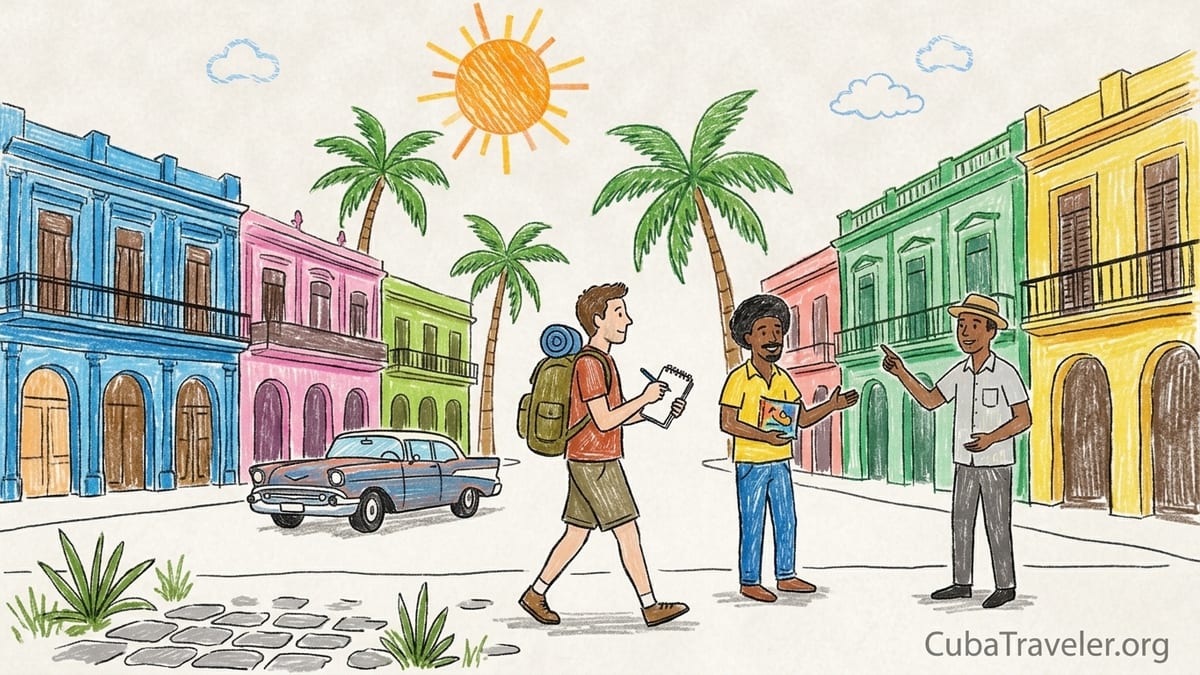
My Legal Basis: Why My Trip Qualified Under 31 CFR § 515.574
At the time of travel, I was and remain a person subject to U.S. jurisdiction: a U.S. citizen residing in the United States, paying U.S. taxes, and using a U.S.-issued credit card. That status meant that every dollar I spent related to Cuba, whether paid in advance through a foreign booking site or in cash on the island, had to fit an authorization in the Cuban Assets Control Regulations, primarily 31 CFR part 515. I chose to travel under § 515.574, the Support for the Cuban People general license, not because it was convenient, but because my purpose genuinely matched the regulation’s core requirement of maintaining a full-time schedule of activities that enhance contact with the Cuban people, support civil society, and promote independence from Cuban authorities.
Before I booked anything, I read the actual text of § 515.574 on the electronic Code of Federal Regulations and the official OFAC examples that explain what qualifies as “support for the Cuban people.” Those examples clarify that merely staying in a private casa particular, eating in private restaurants, and shopping at private stores does not, by itself, create a compliant itinerary; the traveler must build a full-time schedule of qualifying activities with meaningful interaction and a concrete benefit for independent Cubans. I printed the regulation and highlighted the passages about full-time schedule, civil society support, and the example where volunteering with a nongovernmental project qualifies because the traveler’s day is structured around that work, not sightseeing.
I also understood that a “general license” is not something you apply for or receive on paper from OFAC. There is no approval letter for § 515.574. Instead, the authorization exists in the regulation itself. My responsibility was to make sure that my entire pattern of travel-related transactions actually met the conditions. If an investigator later concluded that my activities were mostly beach time and state-run tours, then I never had a valid authorization, regardless of what I checked on the airline’s certification form.
On top of that, the September 30, 2026 amendments to the Cuba program had just taken effect. OFAC updated § 515.209 and related sections to expand the prohibition on transactions with entities on the State Department’s Cuba Restricted List so that indirect financial transactions were now banned, not just direct ones. That meant I had to be sure that none of my payments, even via third-country agencies or foreign credit card processors, flowed to a Restricted List hotel, tour company, or other enterprise.
Understanding the New September 30, 2026 Rules Before I Booked
Because my departure was in mid-October 2026, the Federal Register notice of September 30, 2026 and OFAC’s new and amended FAQs were fresh. Those documents explained that § 515.209 now bars “indirect financial transactions” with entities and subentities on the Cuba Restricted List. OFAC’s examples made it clear that it would no longer be enough to avoid paying a Restricted List hotel directly; using a foreign travel agency, online platform, or third-country bank that routed money to that hotel would also violate the rule if the listed entity was an originator or beneficiary of the transaction.
I read OFAC’s FAQ on the Restricted List, which now stated that multiple general licenses, including § 515.574, exclude both direct and indirect financial transactions with Restricted List entities. The alert from late September and law firm commentaries summarized the practical effect: Americans trying to rely on Support for the Cuban People needed to trace the economic beneficiary of their transportation, lodging, and organized activities with a lot more care. I saved PDFs of the relevant FAQs, the Federal Register rule, and two law firm client alerts into a digital folder labeled “Cuba OFAC background,” anticipating that five years from now I might barely remember why I chose one guesthouse over another.
The rule change also influenced how I handled payments. Any credit card charge would eventually reveal a merchant name or payment processor. I wanted those names to be either clearly private Cuban entrepreneurs, foreign carriers and platforms without ties to the Restricted List, or small third-country service providers that I could document as independent from the Cuban state. I accepted that this might mean paying slightly higher fares or choosing a less convenient booking path in exchange for cleaner compliance.
Finally, I noted that these new rules applied to what OFAC calls “persons subject to U.S. jurisdiction,” a category that includes U.S. citizens and permanent residents, U.S.-organized entities, and any person physically present in the United States. That meant there was no clever workaround involving booking through a Canadian friend or using a European travel site. If I controlled or directed the transaction and I was a U.S. person, it had to comply.
Building a Full-Time, Qualifying Itinerary Instead of a Hidden Beach Holiday
The heart of § 515.574 is the requirement to maintain a full-time schedule of activities that support the Cuban people. OFAC’s examples speak in terms of normal working hours. I translated that into a structure of roughly 6 to 8 hours per day of clearly qualifying activities, not counting meals and personal downtime. I created a day-by-day spreadsheet with time blocks, addresses, names of counterparties, and a short description of how each block supported independent Cuban individuals or civil society.
For Havana, I organized my mornings around meetings with independent entrepreneurs whose livelihoods were not tied to the government. On my first full day, for instance, 9:00 to 12:30 was dedicated to shadowing a private graphic-design studio run by two young cuentapropistas in Centro Habana. We discussed how they marketed to foreign clients, the challenges of importing equipment, and the practical effects of new U.S. sanctions on their ability to receive payments. I brought printed materials about free open-source tools and digital-security guides in Spanish, which we reviewed together on a laptop running offline copies. That session produced real work product and knowledge transfer, not just friendly conversation.
Afternoons in Havana focused on independent cultural and community organizations rather than state museums. One day I spent 13:30 to 17:30 with a grassroots community arts space in San Isidro that operates without formal government sponsorship. The director walked me through their programming for children, how they sourced materials, and how they navigated local pressure when displaying politically sensitive art. I bought two small works directly from emerging artists at prices they set themselves. I documented these hours in my log as support for independent cultural expression and civil society, including the approximate amounts spent and the names of the artists.
Outside Havana, I avoided resort strips altogether. In Viñales, instead of guided horseback rides sold from kiosks tied to state agencies, I spent two full days working with a private agroecological farm that supplies produce to local paladares and sells directly to neighbors. The farmer’s son, who spoke limited English, walked me through their irrigation, seed sourcing, and organic pest-control techniques. I spent the mornings helping with planting and sorting, and the afternoons drafting a simple bilingual brochure they could share with visitors to explain their methods and pricing. I recorded the hours, the family members’ names, and the small stipend I paid directly in Cuban pesos as compensation for the time they devoted to showing and teaching me.
Inevitably there were short gaps between activities. I allowed myself one or two hours some evenings to walk the Malecón or sit in a café, but never full open days of beach time or unstructured wandering. When I did short scenic detours, such as photographing classic cars along Paseo del Prado, I logged them in my notes as non-qualifying leisure time. Seeing those blocks of “not supporting” in my log kept me honest and ensured that leisure did not quietly expand to fill the majority of the trip.
Choosing Compliant Accommodation Under the Prohibited Accommodations and Restricted Lists
Accommodation was the most sensitive compliance choice I made. The regulations and OFAC FAQs make clear that lodging, paying for lodging, or reserving lodging at properties on the Cuba Prohibited Accommodations List is barred to U.S. persons. Separately, the Cuba Restricted List identifies numerous hotels and tourism-related enterprises with which direct and now indirect financial transactions are prohibited. The common advice that “any small private casa particular is fine” struck me as dangerously incomplete, especially after September 30, 2026.
My first step was to cross-check potential properties against both lists. I obtained the most recent PDF of the Cuba Restricted List and the Prohibited Accommodations List from official sources and saved them in my Cuba folder. Then I created a short list of casas particulares from several booking platforms that advertise private homestays in Cuba. For each, I searched its name, street address, and owner’s full name against the lists. If any element resembled an entry even loosely attached to a state hospitality conglomerate, I crossed it off.
In Havana, I selected a two-room casa in Vedado operated by an architect and his spouse, both licensed as private landlords under Cuban law. We handled the reservation through direct email rather than a global platform to better understand who would receive the funds. When they first suggested I pay a deposit through a European intermediary that bundled reservations for several properties, I asked explicitly whether that intermediary’s Cuban counterpart had any connection to a Restricted List group. They responded with a detailed explanation that the payments would be processed by a privately licensed Cuban business not affiliated with any of the named entities. I saved that email thread as evidence of due diligence and then chose to pay the deposit in cash on arrival instead of wiring funds.
In Viñales, the temptation was high to book through an international agency that handled transfers and excursions together with lodging, but many of those packages used local partners connected to Restricted List tourism groups. Instead, I asked the Havana host to recommend a family in Viñales who rented two rooms directly. She provided a WhatsApp number and I wrote a short Spanish message summarizing my situation as a U.S. traveler needing to comply with specific sanctions rules. The owner replied with a simple assurance that they were an independent family business, plus photos of their small sign showing a standard casa particular license. Again, I searched the address, their surnames, and nearby businesses against the Restricted List and found no matches. We agreed that all payments would be cash on-site, and I kept screenshots of our entire conversation.
To be clear, staying in a casa particular was not the activity that made my trip compliant. It simply ensured that my lodging payments did not flow to prohibited state entities. The substantive “support for the Cuban people” came through the work and exchanges I carried out during the day. Nevertheless, I treated the accommodation choice as a core compliance decision, on par with designing the itinerary itself, because an otherwise qualifying trip could still be tainted by lodging at a Restricted List hotel.
Transportation, Tours, and Avoiding Indirect Transactions With Restricted Entities
Transport presented its own set of challenges under the new indirect-transaction rules. My international flights were with a major U.S. airline operating authorized scheduled service between the United States and Havana. U.S. carriers are permitted to offer such flights, and OFAC’s framework for travel-related transactions allows U.S. persons to purchase those tickets. I booked directly on the airline’s U.S. website with a U.S. credit card, kept the confirmation, and printed the certification form in which I declared my travel category as Support for the Cuban People.
Within Cuba, I declined the easy option of booking transfers and day tours through large Cuban or foreign agencies whose local partners were difficult to identify. Instead, I relied on private drivers licensed as self-employed workers. In Havana, I used one driver for several days, a man who operated a classic American sedan as a private taxi. I photographed his taxi license and plate, wrote down his full name and mobile number, and paid him in cash at the end of each day. For the longer run from Havana to Viñales and back, I arranged a driver recommended by my host, confirmed that he was not employed by a state-owned tourism transport enterprise, and again documented his information in my log.
Whenever a potential tour or activity involved an intermediary, I asked two questions: Who exactly receives my payment, and is that entity or any parent company on the Cuba Restricted List. For example, a popular walking tour of Old Havana that I considered appeared to be branded as independent, but the fine print showed that bookings and payments were processed through the reservation system of a well-known Cuban government tourism conglomerate listed on the Restricted List. Even though the guide might have been an independent freelancer, paying through that channel after September 30, 2026 would have created an indirect financial transaction with a Restricted List entity. I declined the tour.
To fill that gap while preserving compliance, my Havana host connected me with a local historian who works as a freelance guide and is not tied to a state agency. We met in person at a café and agreed on a daily fee in pesos. I recorded his full name, the hours we spent together exploring non-governmental galleries and community projects, and the cash I paid him directly. In my log, I treated this as both a qualifying activity (independent cultural and historical education) and a clean transaction that avoided Restricted List intermediaries.
Documenting Receipts, Meetings, and an Unexpected Itinerary Change
OFAC regulations require U.S. persons relying on general licenses for Cuba travel to maintain records for at least five years from the date of the transaction. I decided to behave as if I would be asked for details years later when my memory would have faded. That meant building a portable documentary record as I went, not trying to reconstruct everything once I was back home.
Before departure, I created a simple spreadsheet with four tabs: Itinerary, Contacts, Expenses, and Legal References. The Itinerary tab listed each day and time block with the planned qualifying activity. The Contacts tab listed full names, roles, and contact information for everyone with whom I had meaningful, license-related interaction: entrepreneurs, artists, organizers, guides, and drivers. The Expenses tab logged every payment involving a Cuban counterparty, identifying who received it, the purpose, and how it related to supporting the Cuban people. The Legal References tab contained the citations for each core rule I was relying on, including § 515.574, § 515.209, and the September 30, 2026 amendments.
On the ground, I saved every receipt I could reasonably collect. Private restaurants often issued simple handwritten tickets; I wrote the owner’s name and whether the business was clearly private on the back. For cash tips and informal payments where no receipt existed, I logged the amount immediately in a notes app, then transferred it to the spreadsheet at night. After significant meetings, like the half-day at the San Isidro arts space, I asked my counterpart to send a short email or WhatsApp message summarizing what we had done and learned. These messages, in Spanish, served as contemporaneous confirmation that the encounter was real, structured, and focused on their independent work, not just tourism chatter.
Midway through the trip, a planned visit to an independent bookstore and civic discussion circle in Vedado fell apart when the host messaged to say that local authorities had visited and warned him about “gatherings” of foreigners. He politely cancelled, which left a full afternoon empty. To avoid turning that day into a quasi-vacation, I turned to my Havana graphic-design contacts, who agreed to an extended follow-up session. We used the time to workshop branding ideas for a new line of merchandise they hoped to sell to visitors. I logged the schedule change, attached screenshots of the cancellation and new arrangements, and annotated my spreadsheet to show how I preserved a full-time qualifying schedule even when circumstances shifted.
By the time I departed Cuba, I had accumulated a stack of paper receipts, scribbled notes, and dozens of digital messages. Home again, I scanned or photographed everything, stored the files in a dedicated “Cuba 2026 – OFAC” folder, and backed that folder up to two separate drives. I also exported my airline reservation, boarding passes, and the signed travel-category certification so that, if asked, I could demonstrate the link between my declaration of Support for the Cuban People and the itinerary I actually followed.
Recordkeeping, Retention, and How I Would Defend the Trip
The five-year recordkeeping requirement is the minimum. Given that some U.S. government background investigations look back more than a decade, I chose to keep my Cuba file indefinitely. I tagged all digital documents with keywords like “Cuba 2026 Support for the Cuban People §515.574” to make them easy to retrieve. If a future employer or investigator ever questioned the trip, I could produce contemporaneous notes and receipts showing that I did not simply write “Support for the Cuban People” on a form and head for the beach.
My primary organizing document is a narrative summary I wrote on the flight home. In three pages, I walked through the purpose of the trip, the legal basis under § 515.574, key partners I met, and how the daily schedule met the full-time requirement. I cited specific examples that aligned with OFAC’s own guidance: volunteering structured around community benefit, extended engagement with independent entrepreneurs, and avoiding state-owned hotels and tour agencies. This narrative is not a legal brief, but if I were ever audited it would serve as a roadmap for an attorney to understand and defend my decisions.
I also preserved clean copies of the regulations and FAQs as they existed at the time of my travel, because OFAC rules change and online pages are updated without preserving older language. The September 30, 2026 version of § 515.209, in particular, is central to explaining why I was so careful about intermediaries. If a later version modifies the indirect-transaction language, having the point-in-time text protects me from arguments based on rules that did not yet exist when I traveled.
Finally, I wrote a short memo to myself addressing potential questions: Why did I think each major category of activity qualified as support for the Cuban people. How did I vet accommodation and transport for Restricted List and Prohibited Accommodations issues. What non-qualifying leisure did I allow, and why I believed it did not swallow the full-time schedule. Answering those questions in my own words while the trip was fresh gave me a kind of legal muscle memory that will matter if anyone asks about Cuba years from now.
The Real Burden: Planning Lawful Support vs. Disguising a Vacation
There is no honest way to describe this process as easy. Planning a lawful Support for the Cuban People trip, particularly after the September 30, 2026 tightening of indirect transactions, is more work than booking a Caribbean resort week. It meant reading primary legal sources instead of travel blogs, trading some spontaneity for structured days, and sometimes passing on attractive options because I could not cleanly trace where the money would end up.
It is tempting to think that simply staying in a casa particular, eating at paladares, and chatting with locals is enough. That myth persists in travel forums because many visitors never face scrutiny. But OFAC’s own examples under § 515.574 explicitly say that these passive actions, absent a deliberate full-time program, do not make an otherwise touristic trip compliant. Under the post-September 2026 framework, the government has also made clear that it expects U.S. persons to avoid even indirect financial support for Restricted List entities, which significantly narrows the options for “don’t ask, don’t tell” travel.
The difference between lawful qualifying travel and disguising a beach holiday is not subtle when you put the itineraries side by side. In one, days revolve around independent Cuban partners, with hours spent listening, learning, co-creating, and documenting. In the other, structured activity is sparse, while sunbathing, resort pools, and state-organized excursions dominate, sprinkled with a token stop at a private restaurant to ease the conscience. The former requires effort and sometimes uncomfortable conversations about politics and economics. The latter is easier, cheaper, and more familiar, but it does not fit the legal category, even if the airline form allows you to check the same box.
For me, the planning burden was the price of respecting both U.S. law and the Cubans who invited me into their homes and projects. Going through the trouble to design a full-time, documented support itinerary forced me to take their circumstances seriously. It kept the focus on relationships with real people rather than a checklist of photos. If I cannot defend the trip to an OFAC investigator five years from now without wincing, then I did not truly travel under Support for the Cuban People, no matter what I wrote on the customs form.
FAQ
Q1. Do I need to apply to OFAC to travel under the Support for the Cuban People license?
Not for most trips. The Support for the Cuban People provision in 31 CFR § 515.574 is a general license, which means authorization is built into the regulation. You do not submit an application or receive an approval letter. Instead, you must honestly determine that your purpose and full-time schedule meet the conditions. If they do not, then you are not authorized, even if you checked that box on the airline’s form.
Q2. What does a “full-time schedule” actually look like in practice?
In my case, it meant structuring roughly 6 to 8 hours each day around clearly qualifying activities such as working with independent entrepreneurs, volunteering with community arts spaces, or engaging in extended, purposeful meetings with civil society groups. Meals and casual sightseeing were extra, not the core of the day. I kept a detailed log showing time blocks, locations, and the people I met to demonstrate that my primary purpose was support, not tourism.
Q3. Are casa particulares automatically allowed lodging under U.S. rules?
No. While many casas particulares are privately owned and may be permissible, U.S. persons must still ensure that the property is not on the Cuba Prohibited Accommodations List and that payments do not directly or indirectly benefit an entity on the Cuba Restricted List. I checked each casa’s name, address, and owners against updated lists and avoided any property connected, even indirectly, to Restricted List hotel groups.
Q4. How did you avoid indirect transactions with Restricted List entities after September 30, 2026?
I scrutinized who ultimately received every significant payment. For lodging and tours, I avoided platforms or agencies whose Cuban partners were not clearly independent of Restricted List groups. I favored direct arrangements with identifiable private individuals, paid in cash when possible, and documented names, licenses, and contact details. If I could not confidently rule out a Restricted List beneficiary, I chose a different option.
Q5. Does eating in private restaurants count as Support for the Cuban People?
Spending money at private restaurants, or paladares, can be part of supporting independent Cubans, but by itself it does not usually create a qualifying trip. OFAC guidance emphasizes a full-time schedule of activities that enhance contact with the Cuban people and support civil society. I treated meals in paladares as supplementary support, not as the main qualifying activity.
Q6. What records should I keep to prove my trip was compliant?
I kept flight confirmations, the airline travel-category certification, lodging correspondence, receipts from private businesses, logs of cash payments, and written descriptions of my meetings with entrepreneurs and community groups. I also saved contemporaneous messages summarizing what we did together. All of this is stored in a dedicated folder that I plan to retain for well over the five years required by OFAC.
Q7. Can I still go to the beach on a Support for the Cuban People trip?
Some leisure time is allowed, but it cannot be the primary purpose of the trip. A day dominated by sunbathing or resort pools does not fit the “full-time schedule” requirement. On my trip, I limited unstructured leisure to short windows in the evening and clearly logged it as non-qualifying time so that it remained a minor component, not the centerpiece.
Q8. How did you handle unexpected cancellations or changes in your itinerary?
When a planned civil-society meeting was cancelled, I immediately restructured the day by expanding another qualifying activity, such as additional work with independent designers. I documented the cancellation, the replacement activity, and the new hours. The goal was to preserve a full-time schedule of support even when circumstances on the ground shifted.
Q9. Is it safer to book everything through foreign agencies or friends outside the United States?
Not if you are a person subject to U.S. jurisdiction. The September 30, 2026 changes explicitly target indirect financial transactions with Cuba Restricted List entities, so routing payments through foreign intermediaries does not solve the problem if a listed entity is still an originator or beneficiary. I assumed that any transaction I directed or controlled had to comply with U.S. rules, regardless of which country processed it.
Q10. How big is the difference between lawful Support for the Cuban People travel and a disguised vacation?
The difference is substantial when you examine purpose, structure, and documentation. Lawful Support for the Cuban People travel is built around sustained engagement with independent Cubans and civil society, with careful avoidance of prohibited entities and a paper trail to show it. A disguised vacation typically centers on beaches, resorts, and state-run tours, with only incidental contact with independent actors and little or no recordkeeping. One respects both U.S. law and local partners; the other simply gambles that no one will ever look closely.